 By admin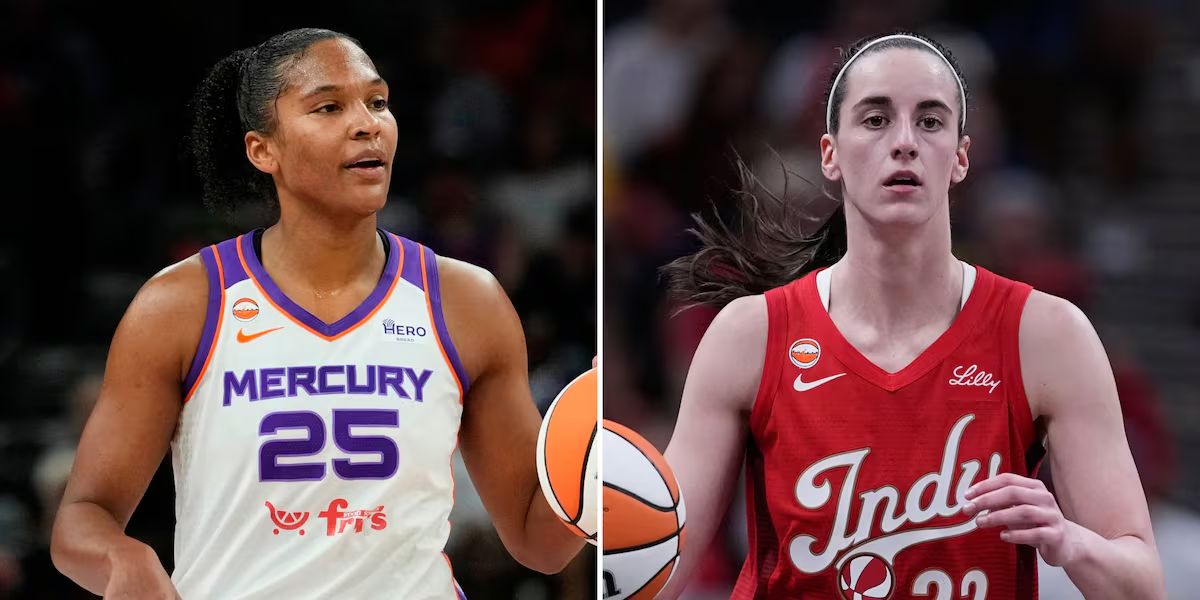
PHOENIX (AP/AZFamily) — A June 24 game between the Indiana Fever and the Phoenix Mercury has become the flashpoint in a national debate over whether the WNBA is doing enough to protect star player Caitlin Clark, and now Congress wants answers.
Read more Benson candidates reflect on recall election ahead of primary
Phoenix Mercury forward Alyssa Thomas made contact with her fist to Clark’s throat during that game. Thomas was not called for a foul on the play, but the league later upgraded it to a flagrant foul and suspended her one game for “recklessly making contact with her fist.”
Thomas has called the play a “complete accident” and has since received death threats, which both Clark and Fever coach Stephanie White have publicly condemned.
Clark did not play Thursday night in Phoenix as a precaution after returning from a back injury she suffered in that same June 24 game.
Congress steps in
The incident has now drawn the attention of Capitol Hill. Eleven members of the House Republican Study Committee sent a letter to WNBA Commissioner Cathy Englebert demanding a response by July 24.
“Millions of casual fans now tune in to watch her play,” the letter read. “Unfortunately, what they too often witness is not simply aggressive competition, but repeated acts of physical hostility and violence. Clark has been hip-checked, poked in the eye and struck in the throat during games.”
Lawmakers also suggested that agencies such as the Department of Justice investigate whether discrimination or retaliation are creating a hostile work environment in the WNBA. The league has not yet issued a statement in response.
The Fever said in a statement that neither Clark nor team officials were in contact with the Congressional group and were unaware of the letter before its release. “We have been clear in our public comments and in our ongoing dialogue with the league about the priority of player safety,” the statement read.
The Clark effect
The 24-year-old Iowa alum has driven WNBA ticket sales and women’s basketball television ratings to unprecedented heights. Clark was drafted first overall in 2024 and instantly became the face of the league — even before playing a pro game. Opponents moved games to larger venues to accommodate her fan base, and Fever games became a national television staple even after Indiana missed the playoffs from 2016 to 2023.
Clark is averaging a career-high 20.5 points per game and ranks second in the league in assists with 7.9 — trailing only Thomas, who leads the league at 8.3.
Fans voted Clark the No. 2 pick for next week’s All-Star Game, while fellow players ranked her 11th among league guards — a gap that drew sharp criticism from three-time WNBA champion and Hall of Famer Candace Parker.
Read more ICS hosting annual Peanut Butter Party Food Drive
“If you’re sitting down and putting Caitlin Clark as the 11th best guard … y’all need to go to a therapist and figure out what childhood issues you have,” Parker wrote on social media.
The polarizing debate
The Clark conversation touches on race, officiating, money and politics. White and Clark are both white; Thomas and Mercury forward DeWanna Bonner — who is also Black and is engaged to Thomas — are both central figures in the controversy.
Stephanie White coached Alyssa Thomas & DeWanna Bonner in Connecticut, and called them both Hall-of-Fame players.
“It was an honor for me to be able to coach those two.” pic.twitter.com/9xwCDOovl0
— Arizona’s Family Sports (@AZFamilySports) July 10, 2026
UConn coach Geno Auriemma, who has won a record 12 NCAA women’s championships, weighed in: Clark “became the reason why white players get beat up in the WNBA and she became the reason why Black players don’t get the endorsements and don’t get the adulation that white players get.”
Clark supporters argue her rapid rise created resentment among WNBA veterans. Critics counter that her shooting and ball-handling ability force defenders to play as physically as referees will allow.
Clark herself has not been without controversy. She has drawn five technical fouls this season — the most recent on June 22 against Phoenix, when she began clapping after a heated exchange with Bonner. Clark told reporters that if clapping results in a technical foul, someone should just pick a date for her suspension.
“I think sometimes people think I’m a robot. I’m not a robot,” Clark said. “It can be really frustrating to me at times. I’m 24 years old trying to navigate a lot.”
Teammate Aliyah Boston said she told Clark plainly: “We’re done. We’re done clapping. There’s no more claps.”
It’s more likely, though, that Clark and her fans will continue clapping — and her critics will keep clapping back.
Read more Attorney says doctor and hospital are liable for Gilbert toddler found alive in morgue