 By admin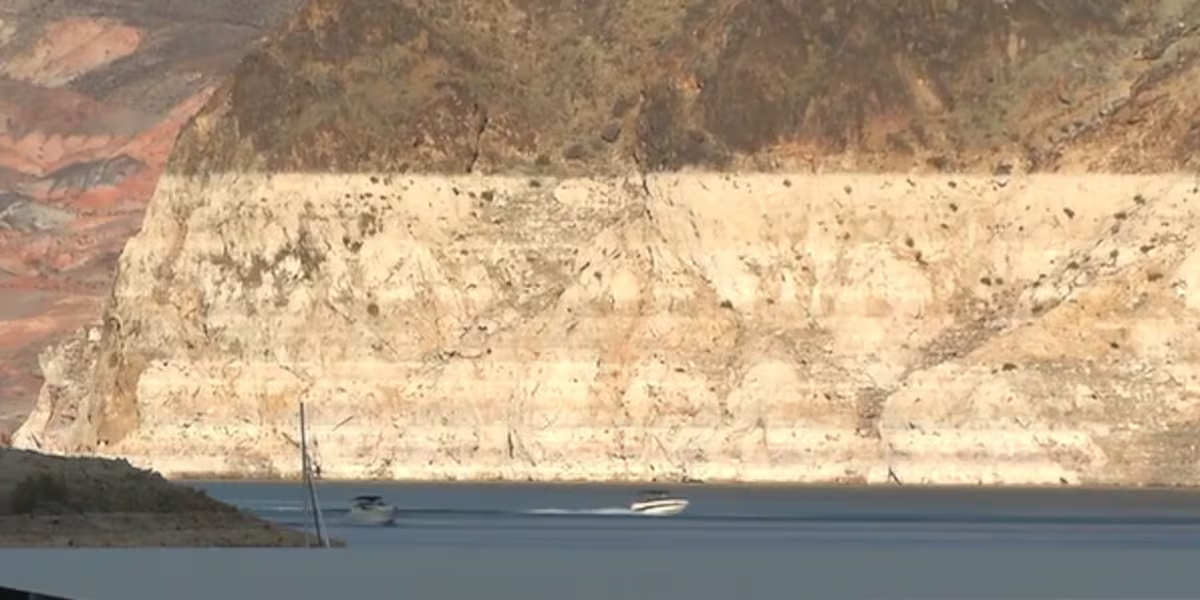
PHOENIX (AZFamily) — A recent study found if Arizona gets another dry winter, we could be in trouble when it comes to our water supply.
Read more Hot car safety: What to never leave inside
According to , Arizona is likely to hit what researchers are calling a “system crash” in the Colorado River basin storage system. This comes as the supply of that river water is dwindling, and the states who rely on it, including Arizona, can’t come up with an agreement to split it up in the future.
READ MORE: Federal officials draft Colorado River plan as states miss deadline for long-term deal
The team of experts, including one from Arizona State University, looked at two different scenarios: what would happen if we get a wet winter, and what would happen if we don’t?
Meteorologists are predicting an active El Niño season, but if it doesn’t pull through, the study finds the Colorado River water storage system is at risk of crashing.
Kathryn Sorensen, the director of research for ASU’s Kyl Center for Water Policy, took part in the study. She told Arizona’s Family water would still be in the reservoirs, but because the federal government has to keep water levels at a certain level to protect critical infrastructure, the only water released would be what we’re getting from Mother Nature in real time.
Sorensen said the federal government would then have to severely cut water deliveries, which is why researchers are calling it a crash. The impact would largely be on agricultural users in central Arizona, like farmers, Sorensen said, which could lead to a further divide between urban and rural communities.
“We really need to start taking a look at the major water users of the basin, and that’s agriculture, she said. ”But politically, that’s just really tough to do.”
“Because American farmers are the backbone of our rural communities, Sorensen added. ”They grow important crops. In Yuma they’re growing winter vegetables that we all like to eat.”
Going forward she predicts we’ll have to make some touch choices and tradeoffs in terms of how we use our water, and it’s helpful to give elected officials the space and grace to make them.
Read more Trump administration’s plan for DC arch involves year-round work at 20 hours a day
This comes as Lake Mead has dropped to near-historic lows. About 40% of our water in Arizona comes from the Colorado River and is delivered from that reservoir. According to the U.S. Bureau of Reclamation, Lake Mead is at about 1,050 feet. Dead pool is considered 895 feet.
Dead pool means the water level in a reservoir has dropped so low nothing flows out of it. Rural areas, tribes and other cities are also dependent on hydropower, so as water levels decline, so does our ability to produce power for those communities. That could have severe economic consequences, according to Sorensen.
She thinks it’s unlikely that we’ll hit dead pool.
“I don’t think the Bureau of Reclamation is going to allow that to happen,” Sorensen said. “But in order to prevent that, they will have to impose potentially very deep cuts in here in the lower basin and potentially in the upper basin as well.”
She said authorities could release less water from lakes Powell and Mead. Taps won’t run dry, but Valley cities would have to fall back on groundwater and other supplies. Sorensen contends we have to be careful about saving that for generations to come.
For months, other water policy experts have also said Arizona can expect higher water bills in the future.
See a spelling or grammatical error in our story? Please click here to report it.
Do you have a photo or video of a breaking news story? Send it to us here with a brief description.
Read more Additional juvenile charged in ambush attack at party in Surprise