 By admin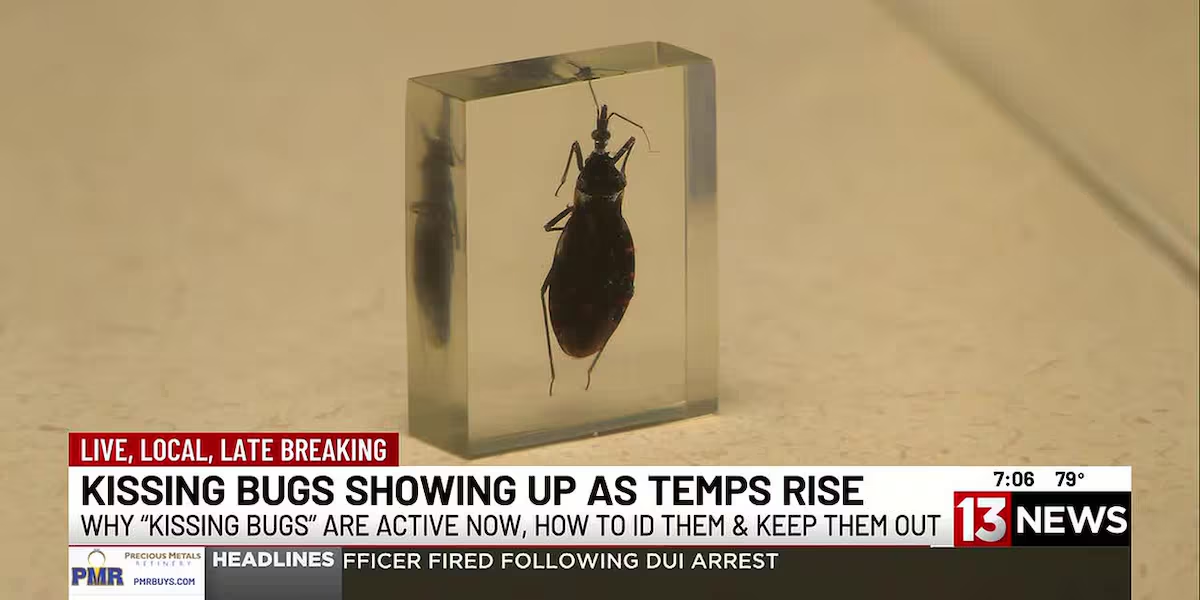
TUCSON, Ariz. (13 News) – As temperatures warm up across southern Arizona, more desert critters are coming out—including an insect that can deliver an unwanted “kiss.”
Read more Man sentenced to 4.5 years in prison for vandalizing Phoenix Art Museum sculpture
They’re called kissing bugs because they often bite people around the face, especially while someone is asleep. Experts say the bugs are attracted to warmth and the carbon dioxide we breathe out. This time of year, adult kissing bugs are more likely to be seen as they begin flying around dusk to find mates—and they can sometimes make their way inside homes.
Kissing bugs are typically active at night, more common in desert areas, and measure about half an inch to one inch long. They have a flat, oval-shaped body, often dark brown or black, with orange or red markings along the edges.
Ellen Santos, an epidemiology manager with the Pima County Health Department, says kissing bugs often stay hidden in places like pack rat dens, where they can feed without moving far. But once the bugs mature into adults and need to disperse, that’s when people may start spotting them more often.
A kissing bug bite is often mild, and some people may not even feel it. However, in some cases, bites can cause a serious allergic reaction, including swelling and inflammation.
Some kissing bugs can also carry a parasite that causes Chagas disease—an infection that can begin with flu-like symptoms, but in more serious cases can lead to long-term heart or digestive problems. Health officials stress Chagas is not spread person-to-person, and it isn’t spread by the bite itself. Transmission can happen if an infected bug leaves feces near the bite and it gets into the skin.
If you find a kissing bug in your home, don’t touch it with bare hands. The Pima County Health Department can accept bugs for testing. If you choose to kill it instead, officials recommend doing so inside a sealed plastic bag to avoid contact.
Read more American flag removed from Hoover Dam due to tear
You can also consider treating around your home with an appropriate insecticide and taking steps to reduce attractants and hiding spots.
Tips to keep kissing bugs out
- Switch outdoor lights to yellow bulbs
- Prevent pack rats from nesting near or in your home
- Seal cracks and crevices
- Install or repair screens on windows and doors
Don’t forget pets
People aren’t the only ones at risk of being bitten. In rare cases, pets and livestock can also be exposed. Santos says dogs may even eat the bugs, which can increase risk if the bug is infected. If you believe your pet was exposed, call your veterinarian for next steps.
Santos says 21 bugs were submitted for testing in spring and summer of 2025, and 7 have been submitted so far this year. Since 2023, only two kissing bugs tested positive for the parasite, and there have been no reported cases of Chagas disease locally in the past few years.
If you have any questions on what to do with a kissing bug in your home or have been bitten and want more answers, you can call the PCHD’s Epidemiology team at (520) 724-7797.
=====================================================
Are you streaming 13 News?
Watch a free live stream of Tucson Now and 13 News at TucsonNow.Live.
Be sure to download the free Tucson Now app which you can find on Apple and Google.
If you are using a desktop computer, you can use your mobile device to scan the QR code below.
Read more Beware of ‘ghost tickets’ as World Cup excitement builds
You can submit your breaking news or weather images here.