 By admin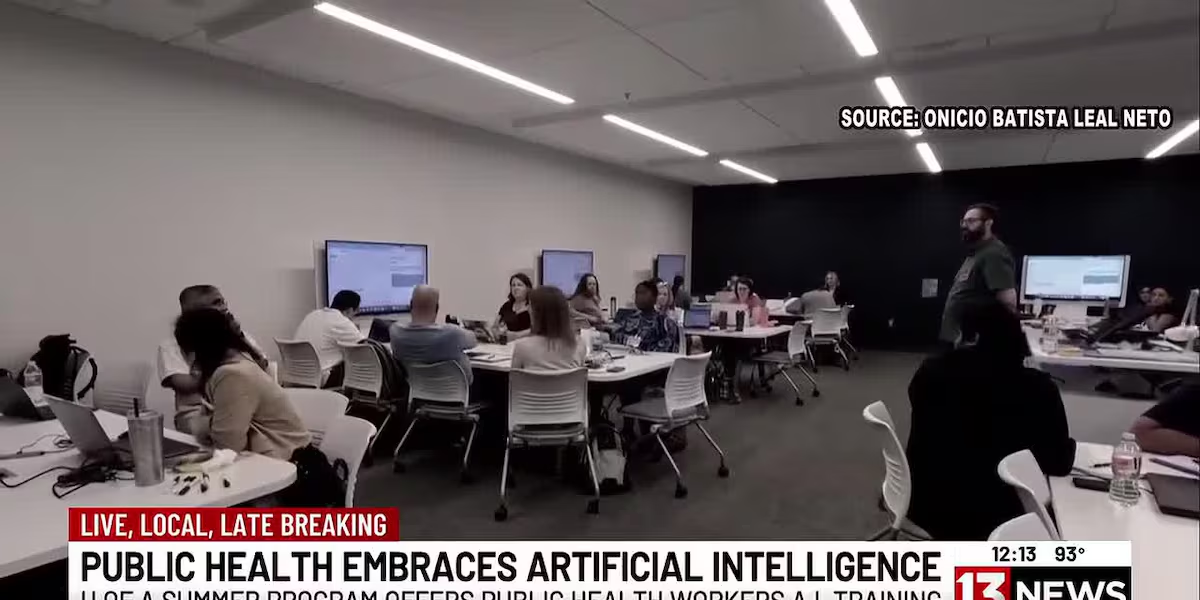
TUCSON, Ariz. (13 News) – Artificial intelligence is becoming a bigger part of public health, and the University of Arizona is working to make sure professionals know how to use it in real-world settings—and do it responsibly.
Read more Driver arrested after toddler killed in hit-and-run in west Phoenix
This week, the U of A College of Public Health is hosting a four-day summer program bringing 74 public health experts from around the world to Tucson for training focused on AI literacy, ethics, and hands-on applications.
“We can use or we should use artificial intelligence as a tool, but looking at the domains of public health and if we can prepare the next generation of public health professionals with those skill sets, that’ll be great for a positive impact in the community,” said Onicio B. Leal-Neto, an assistant research professor at the U of A College of Public Health.
Program leaders say the curriculum is designed to meet participants where they are—starting with foundational lessons for those new to AI, including what it is, how it works, and how to think through the ethical questions that come with using these tools in health care and research.
The program also offers an AI fluency track for more advanced participants, with hands-on work that includes coding and working with real-world datasets, allowing professionals to leave with projects they can continue to build and deploy outside the classroom.
Leal-Neto says AI can support public health in multiple ways—from improving disease forecasting to strengthening decisions that impact communities.
“We can use A-I for doing predicational forecasts for the next disease that might happen or we can use A-I to design better policies to serve our communities with some health problems,” he said.
Read more What to know about Prostate Cancer screening and diagnosis
Leal-Neto emphasized the program is not about forcing new technology into public health, but about teaching public health-first thinking and then applying AI as a tool to address existing challenges.
“This is not a general course that we are teaching A.I. tools and we are trying to push those tools into public health space—we are doing the opposite,” Leal-Neto said. “We are teaching them the foundations of public health and how we can use those tools to solve our existing challenges in this field.”
Program leaders say as AI’s role in public health grows, so does the need to train experts who understand how to use it responsibly. This year marks the program’s second year, and UA officials say they’re excited to continue expanding the training as demand increases.
Program leaders say demand for the training is growing, so they’re launching a virtual version of the program in July—giving participants the option to learn on their own time, from wherever they are, without traveling to Tucson. To stay updated on registration and deadlines, officials recommend signing up to be notified.
===================================================
Are you streaming 13 News?
Watch a free live stream of Tucson Now and 13 News at TucsonNow.Live.
Be sure to download the free Tucson Now app which you can find on Apple and Google.
If you are using a desktop computer, you can use your mobile device to scan the QR code below.
Read more ADOT offers monsoon safety tips ahead of storm season
You can submit your breaking news or weather images here.