 By admin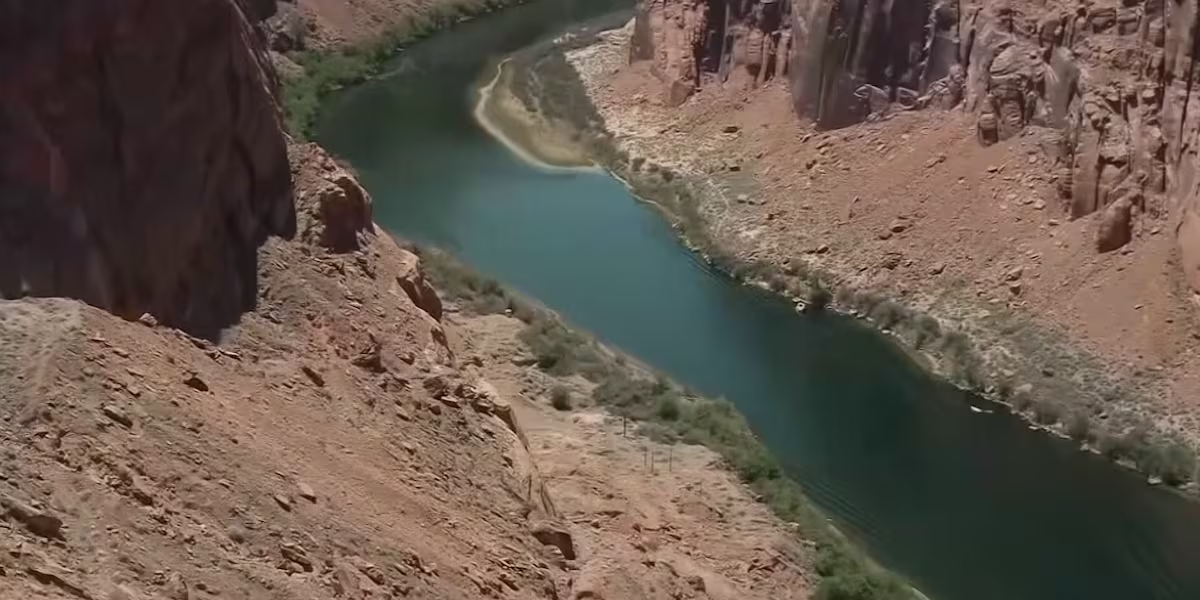
YUMA (AZFamily) — Western states still have not reached a long-term agreement on how to share water from the shrinking Colorado River, prompting federal officials to move forward with their own proposal — a plan that could mean significant new cutbacks for Arizona cities, farms and businesses.
Read more Arizona dad, teen daughter help rescue 6 from fiery Carefree Highway crash
The U.S. Bureau of Reclamation is now aiming for a 10-year operating plan for the river system, with prescribed reductions that would be reassessed every two years. The approach comes after years of negotiations among the seven basin states failed to produce a new, durable agreement for the next two decades.
A river that ‘just looks lower’
As the Colorado River winds through Yuma, residents say the change is visible.
“This is what’s left today,” one local observer said, as the river continues to supply water for households, industry and agriculture across seven states.
The stakes are high in Arizona, where Colorado River water supports municipal systems and irrigation districts, including deliveries through the Central Arizona Project canal.
What the federal plan could mean
The bureau’s proposal is intended to protect the river and the system’s two largest reservoirs, Lake Powell and Lake Mead, which have been strained by prolonged drought and rising demand.
But the plan would also require cuts.
Sarah Porter, director of the Kyl Center for Water Policy at Arizona State University, said the reductions being discussed push right up against what municipal providers can absorb.
“It’s not such a deep cut that it would create a lot of disruption for municipal water providers, but it’s right at that edge,” said Porter.
Read more ASU study finds data centers warming nearby neighborhoods
Porter added that under the federal concept, Arizona water users could be required to give up a significant share of their water without being compensated.
“Approximately just a little bit less than half of the amount of water that would run in the Central Arizona Project Canal in a non-shortage year,” she said.
Where things stand now
Two weeks ago, Arizona, California, and Nevada announced a separate agreement to reduce their reliance on the Colorado River. It is still unclear whether that agreement will take effect as written or whether the Bureau of Reclamation’s federal proposal will be the path forward.
For now, big questions remain about how Arizona’s cities and agriculture would adapt if the federal cuts move ahead.
The Bureau of Reclamation is expected to announce the next steps later this summer.
Read more Medical Examiner report traces timeline of ICE detainee’s care in Arizona before death