 By admin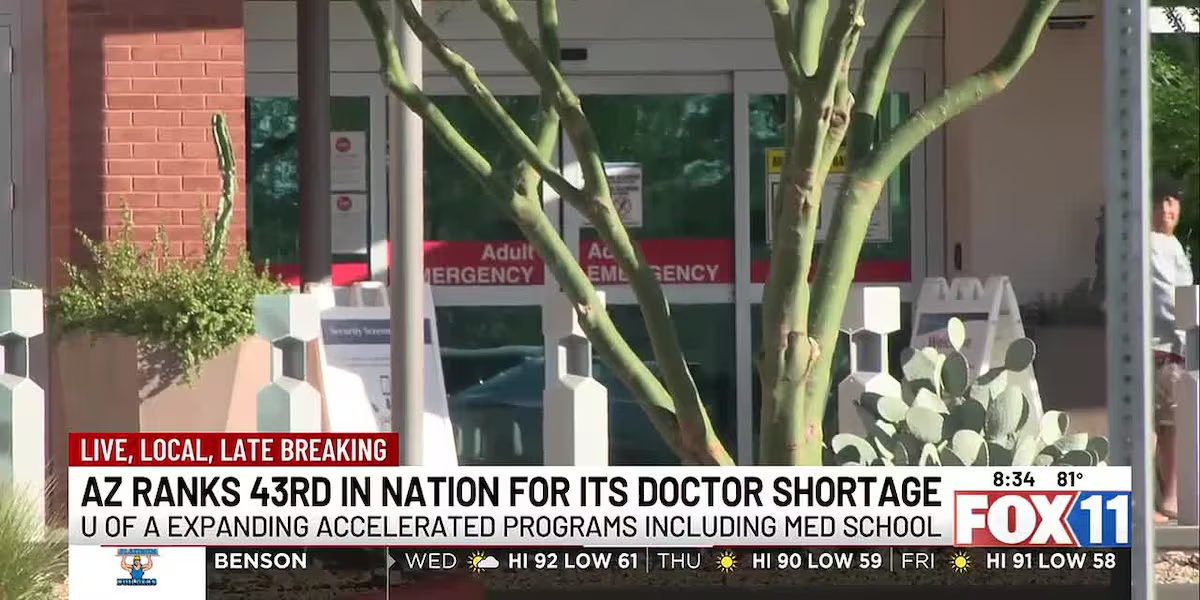
TUCSON, Ariz. (13 News) – Medical Experts say Arizona’s doctor shortage is getting worse and a failing healthcare system has far-reaching consequences for all of us.
Read more New research warns immigration crackdown is hurting Arizona’s workforce
According to University of Arizona Community Medicine Professor and Chair, Dr. Kristen Rundell, Arizona ranks 43rd in the nation for the severity of its doctor shortage.
“And it’s only going to get worse because we have more and more people moving to the state of Arizona,” Rundell explains.
She says the problem isn’t a lack of interest. It’s a lack of medical student graduates.
“It’s not that doctors aren’t moving to the state. We need to actually graduate more people from our medical schools and residency programs. Wherever you do your residency is where you’re most likely to stay.”
Rural and tribal areas are hit hardest. Without enough primary care doctors, more patients end up in emergency rooms.
“When people have access to healthcare, they’re healthier, there’s less hospitalization, and less cost to the system.”
“And so what we need is more residency programs that support those areas so that more doctors, as they come, will do their rural residency and then stay in those rural areas,” Rundell says.
The University of Arizona’s Vice Dean of Medical Education, Dr. Kevin Moynahan, says Arizona needs more than 8,000 additional doctors by 2030.
Read more Earthquake swarm shakes southern California, southwest Arizona
To help, the University of Arizona is expanding accelerated programs, including a three-year medical school track.
“Three years of medical school, three years of residency, and then on to practice – whereas the traditional pathway is a minimum of 8 years of medical school,” Moynahan explains.
Student debt is a major barrier, but scholarships are expanding, including a $14.2 million endowment from the Gerleman family that provides approximately one million dollars a year for scholarships.
In return, students commit to primary care fields and at least two years of service in underserved Arizona communities.
While the university takes about 70% of its students from Arizona, knowing they are more likely to stay here, local hospitals still work to ensure that happens.
“Hospitals do offer signing bonuses for residents that stay. For example, Banner, our major clinical partner, if one of their residents commits to staying, they will offer a signing bonus to do so,” says Moynahan.
With the accelerated pathway program starting in 2021, the U of A does not have any graduates yet, but so far, the results are looking positive.
Read more Sky School brings hundreds of students to Mount Lemmon for research
For more information on their accelerated programs, you can find it here.