 By admin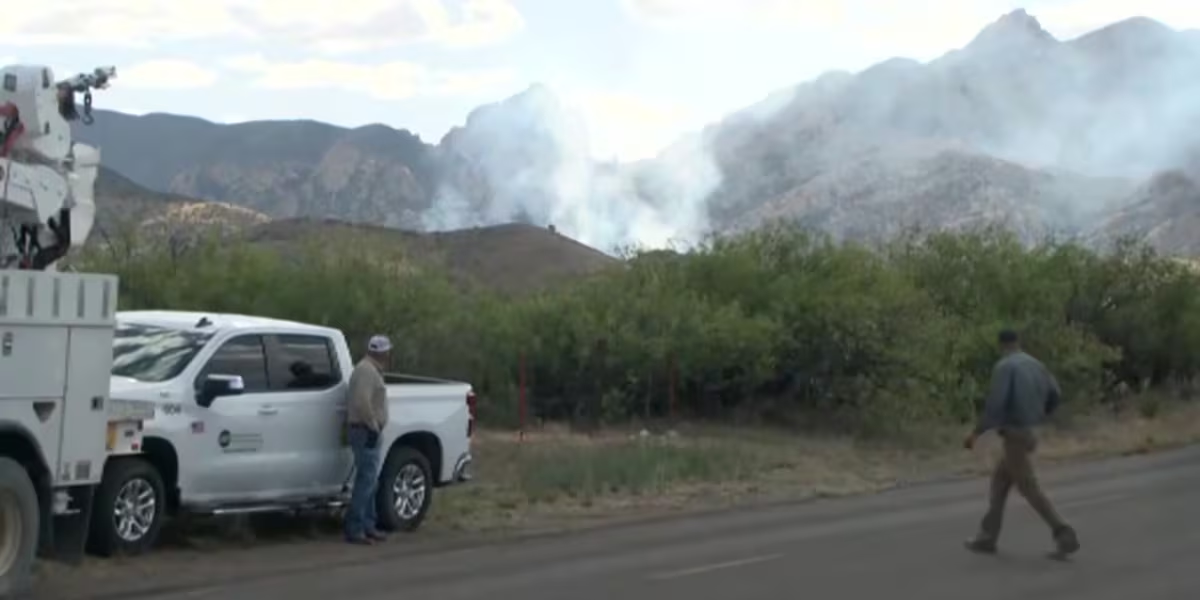
PHOENIX (AZFamily) — The Jones Fire has turned parts of Wickenburg into a maze of ash and twisted metal, with melted RVs and charred trees marking the destruction.
Read more Ex-Arizona firefighter sentenced to 24+ years in prison for making child porn
For people who lost everything, even recognizing what remains is difficult.
“I’m trying to recognize things, there’s my window air conditioner. My refrigerator used to be over there,” Diane Harding told Arizona’s Family Tuesday.
The weather is quickly becoming one of the biggest challenges for firefighters on the lines.
“It’s going to be hot and dry today and throughout the rest of the week. And that’s what we’re going to be facing here in the next couple of months,” said Tiffany Davilla with the Arizona Forest and Fire Management.
The Jones Fire is not the only blaze made tougher by weather conditions. A wildfire near Buckeye earlier this month also faced the same obstacle. That fire is still burning, with more than 1,100 acres scorched, though it is now mostly contained.
“The fire danger is going to remain pretty high for the next 60 days or so,” said First Alert Meteorologist Royal Norman.
Arizona in high-risk zone
The National Interagency Fire Center released its fire danger outlook for the next four months, and much of Arizona is in the red for this month and next.
Norman said the state is high on the risk map because of a snow drought.
“We had a snow drought, so we haven’t recovered from that. And we’re in the part of the season before the monsoon where we just don’t get a lot of rain in the southwest,” Norman said.
By July, Arizona should start to see some improvement. Only the northern part of the state stays in the red. By August, the outlook shows all of Arizona out of that highest risk zone.
Read more Tucson-area consumers cut back as inflation surges
Norman said forecasters are expecting an active monsoon this summer because of El Niño.
Potential relief
El Niño is a weather pattern that happens when ocean temperatures in the central and eastern Pacific run warmer than normal. That shift in heat changes wind patterns and the path storms take, which can have an impact on the weather.
“It’ll be an early onset of El Niño. It’s really not going to get kicking in until next winter, which could add to our snowpack. But as it grows, it sets up Arizona for a real decent chance, and that’s just a chance to have more than average rainfall statewide,” Norman said.
While conditions look tough in the short term, that El Niño-driven monsoon could bring some relief later this summer.
Firefighters say until then, the best thing people can do is clear brush around homes and have a wildfire plan ready.
See a spelling or grammatical error in our story? Please click here to report it.
Do you have a photo or video of a breaking news story? Send it to us here with a brief description.
Read more Closing arguments heard in retrial for Tucson man accused of killing pregnant girlfriend