 By admin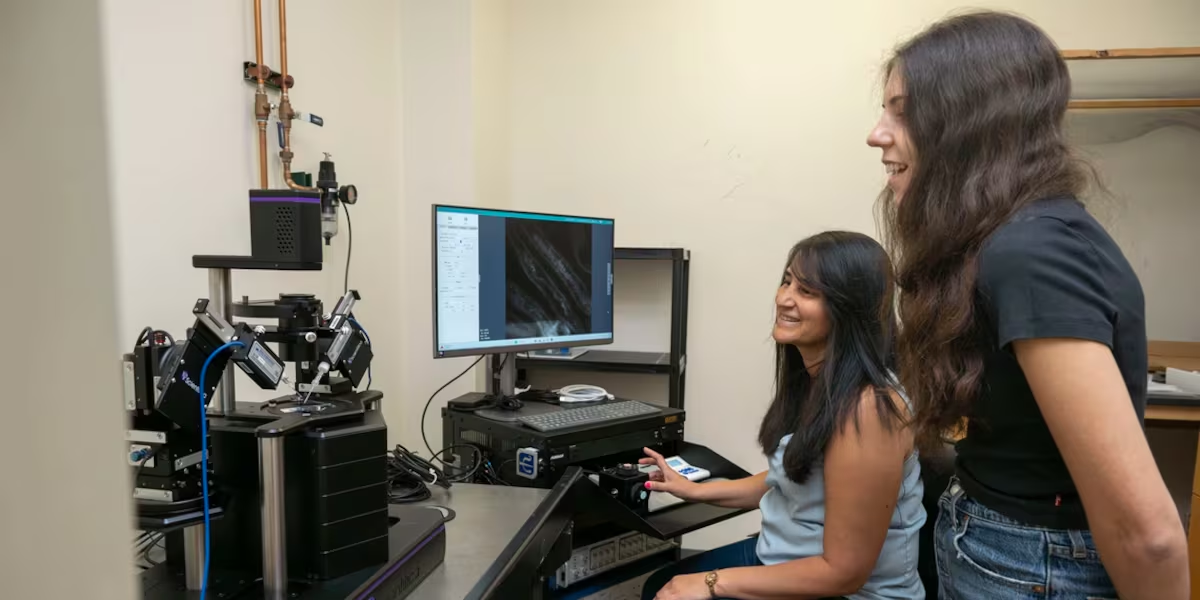
TUCSON, Ariz. (13 News) – A University of Arizona researcher says the “gut feeling” people experience is not imagined. The brain and stomach communicate, and one scientist has made it her work to decode those messages.
Read more Longtime Arizona Sen. Jon Kyl dies following dementia diagnosis
Dr. Maya Kaelberer, an assistant professor at the University of Arizona College of Medicine, studies what she calls the language of the gut.
“What is the language of the gut? And how can I use that to make better food decisions,” Kaelberer said.
Neuropods act as messengers
Kaelberer said this “gut sense” is probably the oldest human sense. She discovered neuropods, sensory cells that detect nutrients and transmit signals to the brain in milliseconds.
“When you eat a meal, there’s this feeling of contentment. It’s like, ‘hmmmm.’ And that’s what our gut is telling us,” Kaelberer said.
Kaelberer said people can retrain the feeling if they know what to pay attention to.
“We can train our gut. We can train that feeling as long as we know what we’re paying attention to,” Kaelberer said.
She said the gut communicates whether food is gratifying or satisfying, which goes beyond initial taste.
“I think our gut is telling us something about how gratifying or satisfying is your food, and that’s more than just how does it taste initially,” Kaelberer said.
Sugar versus sugar substitutes
Kaelberer said the tongue cannot distinguish between real sugar and artificial sweetener, but the neuropods in the gut can.
“The signal from that real sugar is driving us to consume it,” Kaelberer said. “While the tongue cannot distinguish between real sugar and artificial sweetener, the gut, these neuropods, can.”
Read more Tucson weighs partnership to speed PFAS groundwater cleanup
Kaelberer said this may explain why some people do not see weight loss from drinking diet soda.
Kaelberer said people will not get the same feeling of contentment from artificial sweetener.
Cells turn over monthly
Kaelberer said the neuropod cells turn over every month, meaning new food habits can take hold within that time frame.
“If you’re trying to maintain a new food habit, you need to maintain it for about a month before it will really stick,” Kaelberer said. “You can do anything for a month. By the end of that month, suddenly it becomes easier.”
Kaelberer also found that taste preferences can be inherited from mothers.
“We’re seeing that they can be passed from mother to child. They are influenced by who you’re around,” Kaelberer said.
Kaelberer said research into the gut’s sixth sense is still in early stages.
“We know almost nothing about how this is working, so it’s like the wild west,” Kaelberer said.
Kaelberer’s latest research examines how a pregnant mother’s diet creates a nutritional memory for her children, and how surrounding influences affect food choices. More information is available in the Fact Finders podcast on kold.com.
==================================================
Are you streaming 13 News?
Watch a free live stream of Tucson Now and 13 News at TucsonNow.Live.
Be sure to download the free Tucson Now app which you can find on Apple and Google.
If you are using a desktop computer, you can use your mobile device to scan the QR code below.
Read more Vehicles stuck in Pima County flooding
You can submit your breaking news or weather images here.