 By admin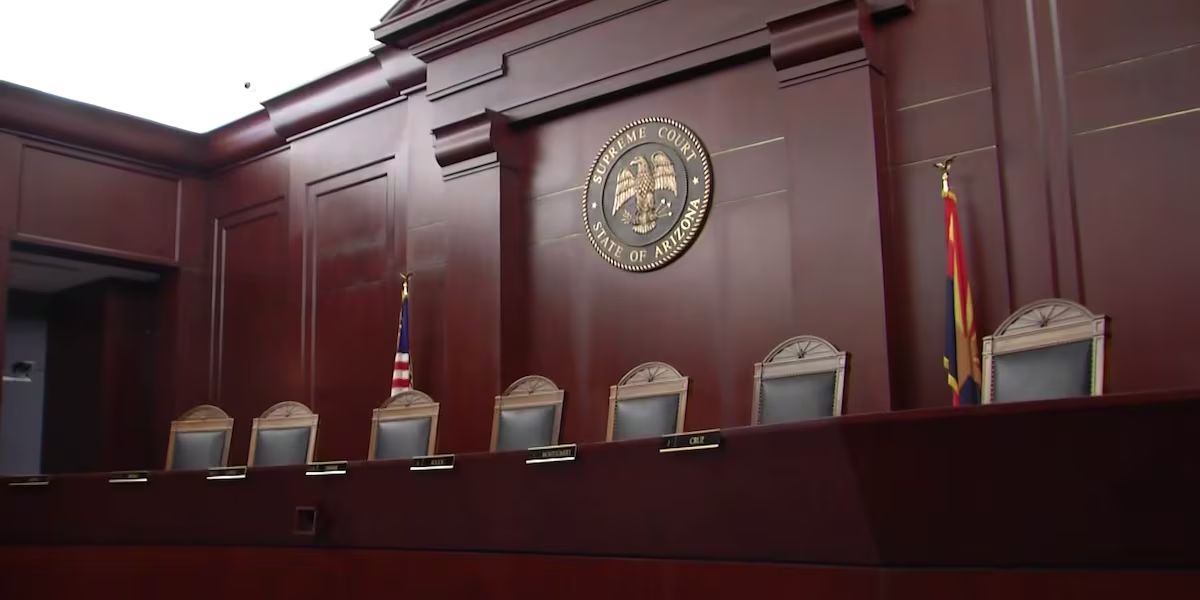
TUCSON, Ariz. (13 News) – The Arizona Supreme Court has rejected a petition to ban judges from using artificial intelligence in their core work, choosing instead to continue a highly regulated testing phase.
Read more Trump announces plan to break up meatpacker monopoly amid rancher backlash
The decision denies a petition filed on Jan. 12, 2026, that proposed “Rule 135,” which would have implemented a strict moratorium on generative AI usage for “core judicial work” through 2029.
Instead, the state will continue its current policy of testing the technology under close supervision. Under the Supreme Court’s guidelines, judges may only use approved AI tools to help reduce case backlogs, improve administrative efficiency, and enhance overall public access to justice.
However, the court drew a firm ethical line on judicial authority, ruling that judges cannot use AI to write actual legal rulings or make final decisions on cases.
Local legal professionals said integrating technology into the courtroom is the next step in the evolution of the legal field.
“There have been tools for decades that will help legal professionals make decisions, such as case law searching—we went from books to online,” said Jaime Ibrahim, Deputy Director for Southern Arizona Legal Aid. “We have law clerks who will help draft things. This is really just another tool if used correctly.”
Ibrahim, who has been an attorney for 20 years, said AI has been steadily trickling into the legal profession over the last few years. She believes that if used ethically, the technology can be incredibly beneficial to the justice system.
“If it’s here and it’s going to be here to stay, then we need to learn how to use it effectively, how to use it properly, and how to not let it really take over in an inappropriate way,” Ibrahim said, adding that many attorneys already ethically utilize AI in the briefs and paperwork they submit directly to judges.
University of Arizona Law Professor Keith Swisher agrees that blocking access to modern technology could hold the legal system back.
Read more Yuma-area coach fired after protecting bullied student gets teaching credentials back
“It could potentially stunt courts if they had no access to AI,” Swisher said. “For a court to be completely oblivious of, ignorant of, or not allowed to access AI could potentially be dangerous or set it back in our modern society.”
Swisher points out that AI tools are becoming crucial as the justice system deals with new challenges, such as identifying deep-fake evidence or helping navigate cases where individuals represent themselves using legal advice generated by AI.
However, both legal experts and the Supreme Court emphasize that artificial intelligence cannot replace human oversight.
“Sometimes AI can make mistakes still, or exaggerate certain points, or miss other points,” Swisher warned. “It still needs a trained human review to go through the material, even when you’re having that smaller-scale reliance on AI.”
The Arizona Steering Committee on Artificial Intelligence and the Courts is continuing to evaluate the technology and is scheduled to submit its next major status report to the Supreme Court on March 1, 2027.
Are you streaming 13 News?
Watch a free live stream of Tucson Now and 13 News at TucsonNow.Live.
Be sure to download the free Tucson Now app, which you can find on Apple and Google.
If you are using a desktop computer, you can use your mobile device to scan the QR code below.
Read more Man says he tried to stop family fight before deadly Buckeye shooting
You can submit your breaking news or weather images here.