 By admin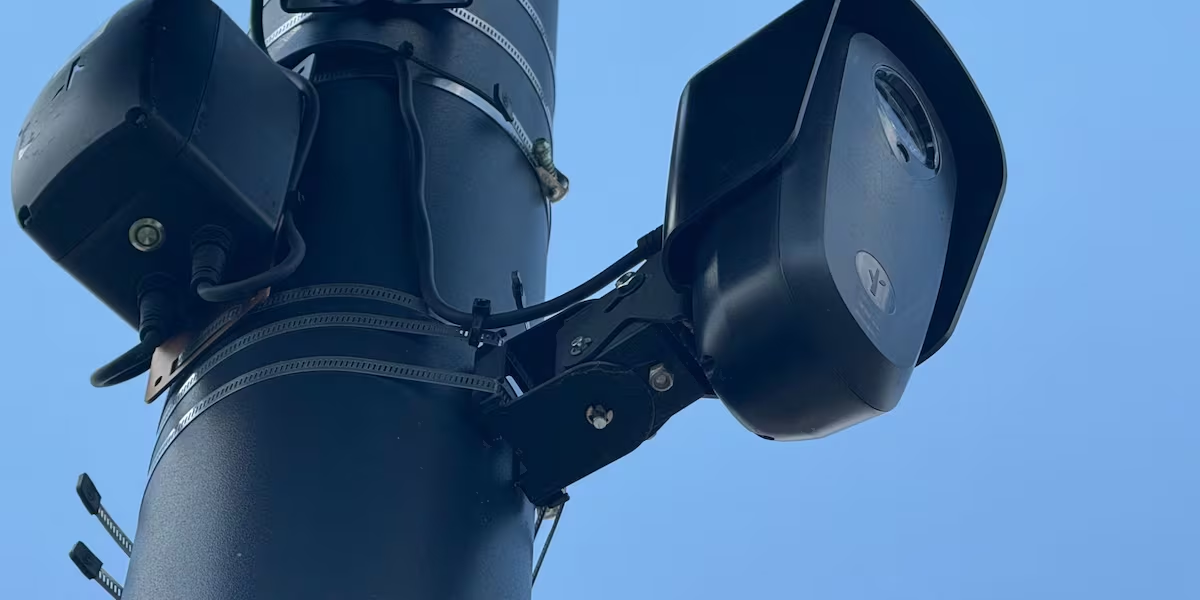
TEMPE, AZ (AZFamily) — The city of Tempe could become the first city in Arizona to pass a law banning automated license plate reader cameras now and in the future.
Read more Witness may be key to helping Phoenix police find deadly hit and run suspect
In August, Tempe announced it was ending its contract with Flock, a company that produces ALPRs, because of concerns over the risk of misuse.
“That was a proactive choice that we made to protect the privacy of our residents and our workers and students, and that was actioned as quickly as we could through the city staff,” said Councilmember Bobby Nichols. “So, this has been done without a direct vote from council at this point. But what we are going to be doing is bringing this ordinance forward in order to solidify in an ordinance that the city of Tempe is not going to be using ALPRs in the future going forward.”
Nichols, who is a member of the Democratic Socialists of America, is on the Tempe City Council and is planning on bringing forward the ordinance to put the decision to not use ALPR cameras into the city code.
“In the future, it’ll just be good to have this policy locked down by an official act of the city council,” he said.
Tempe Councilmember Bobby Nichols will share his proposal to ban the City’s use of automated license plate readers and prohibit future contracts with ALPR companies during a public meeting on Wednesday, Sept. 9.
The proposal would put Tempe’s recent decision to stop using… pic.twitter.com/bqCANG31L4
— City of Tempe, AZ (@Tempegov) September 5, 2026
If passed, it would prohibit the city from using license plate readers for law enforcement, require that existing ALPR data be destroyed, and employees who break the rules could be fired.
“There’s no real safe way to use this technology,” Nichols said.
But not everybody who lives in Tempe wants an outright ban on this type of technology.
“There’s safeguards in the system. Could there be more safeguards for the Flock system? Yes,” Bill Richardson said.
Richardson is a retired detective who lives in Tempe. He points to Tempe’s crime rates as a reason ALPR cameras should be used by law enforcement in the city. According to DPS, Tempe averaged more than 10,000 crimes a year from 2022 to 2025.
Read more CCSO: Drunk driver crashes into school bus full of kids
“The Flock cameras were a tool that they could use to improve their chances at identifying and arresting and prosecuting criminals,” Richardson said.
Richardson said other police tools, like service weapons and access to other sensitive data, carry risks too. He said he doesn’t understand why Tempe is singling out ALPRs.
“I think we’ve seen an emotional reaction,” Richardson said.
There would be some exceptions to the ban, including allowing the city to use data collected by ALPRs from other agencies or private ALPR systems in specific circumstances, like looking for missing people or when authorized by a search warrant. It would also allow the use of these systems for certain non-law enforcement purposes, like managing city parking lots or garages.
Nearly a dozen cities, towns, and counties across Arizona, including Tempe, have either ended their ALPR contracts, temporarily suspended or announced they do not plan on renewing.
Other communities have put in increased safeguards for their programs. Would anything like that work in Tempe instead of an all-encompassing ban?
“Until those financial incentives change, and the way they make money is not by building the biggest data set possible, I really don’t see how any guardrails could be implemented that would actually address the Fourth Amendment issues that are raised by this technology,” Nichols said.
Nichols plans to introduce the ordinance at the council’s September 24 meeting. The council could vote on it as soon as October. The city is seeking public input through an online survey; you can find it if you click/tap here.
See a spelling or grammatical error in our story? Please click here to report it.
Do you have a photo or video of a breaking news story? Send it to us here with a brief description.
Read more Why some Arizona suspects are fleeing overseas, not just the scene