 By admin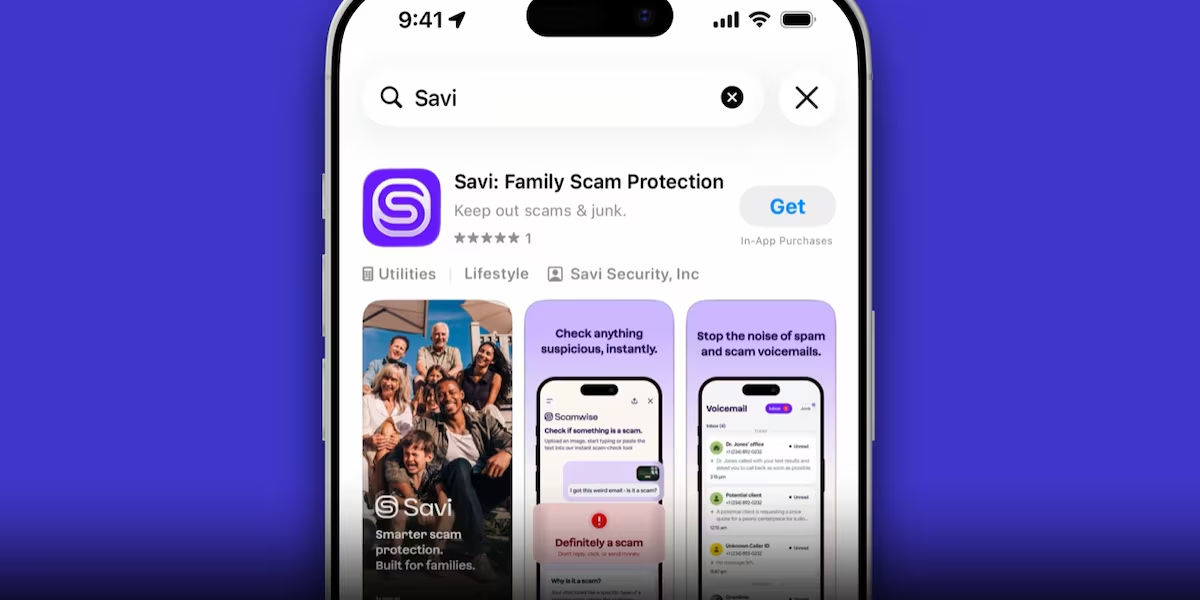
PHOENIX (AZFamily) — The call sounded exactly like their sister: “Mom, I need help. Please do what they say.”
Read more AI in Arizona politics: How to spot AI-generated campaign ads
Except it wasn’t Patrick and Ryan Coughlin’s sister. It was a scammer using an AI voice clone to stage a fake kidnapping, trying to trick their mother into sending money, and it inspired the two brothers to turn their experience into a cybersecurity company.
The Coughlins are the co-founders of Savi Security, which launched the Savi app for iOS and Android this month after a $7 million seed round led by Acrew Capital. The brothers appeared on Generation AI this week to discuss the company and the scam that started it.
‘Everything about that call was fake’
Patrick Coughlin said the incident occurred a little over two years ago, when his mother received a call that appeared to come from his sister, Courtney.
“She picked up the phone and she heard my sister’s voice, or what sounded like my sister’s voice,” he said. “And she was saying, ‘Mom, I need help. Please do what they say.’ And then a man came on the line and said, ‘We’ve got your daughter at the local Walmart in Olathe, Kansas, and we’re going to kill her if you don’t PayPal us some money right away.’”
At first, his mother believed her daughter was in danger. In reality, scammers had cloned the sister’s voice and spoofed her phone number.
“Everything about that call was fake,” Patrick said. “The voice was fake. They had spoofed my sister’s number. And yet the emotions she felt were real, and the trauma that she felt was very real.”
The story echoes one of the first AI voice-cloning scams to make national headlines: in 2023, a Scottsdale mother named Jennifer DeSefano testified that scammers used AI to mimic her daughter’s voice in a fake kidnapping call, just months after the release of ChatGPT.
From family incident to startup
Ryan Coughlin said the family began researching voice-cloning scams immediately. About a year later, the brothers started building the company.
Both came to the problem from industry: Patrick, Savi’s CEO, previously worked in enterprise cybersecurity at Splunk, Cisco and Booz Allen Hamilton. Ryan built consumer AI products at Apple and Spotify.
Patrick said the average American now receives at least one scam call, text or email every day, and described digital fraud as the fastest-growing crime facing consumers.
“Scammers are now using AI, which is essentially the perfect weapon,” Patrick said. “The same power that can help talk like us and create pixel-perfect images and sound like us can also be used to deceive us.”
Read more Results of Nolan Wells’ death investigation to be turned over to grand jury, Crump says
He said most cybersecurity innovation has focused on governments and large companies, leaving a gap for consumers. “We need to build a bigger tent for cybersecurity tools, make these tools easier to use and more approachable,” he said.
What the app does
Scamwise, the company’s free tool, launched as a website in March and requires no registration. Users can submit screenshots of text messages, forwarded emails or photos of physical mail, such as suspicious jury-duty notices and Medicare bills, and receive an assessment and recommended next steps.
Ryan said the tool analyzes behavioral cues, such as payment demands, and checks details like how recently a linked domain was created.
The tool has processed more than 100,000 submissions since March, Patrick said. The company said in its launch announcement that more than half of the messages reviewed were identified as scams.
Paid features include text message protection, which routes suspected scam texts to junk before they reach the inbox, and voicemail screening, which flags suspicious messages from unknown callers. During testing by Generation AI, the app flagged a staged threatening voicemail and moved it out of the main inbox.
A live call monitoring feature, called On Call, lets users add Savi to a call in progress. The company says it listens for scam patterns and alerts the user in real time.
“Sometimes you’re in the moment and you want to add a line and get a third party on that call with you,” Ryan said, “so we can listen in and say, hey, we think this is suspicious. It’s probably time to hang up.”
A single plan costs $7.99 per month or $62.99 per year. One plan covers an entire family with no cap on members.
The company said a proactive call-screening feature that blocks scam calls before the phone rings is slated for fall 2026.
See a spelling or grammatical error in our story? Please click here to report it.
Do you have a photo or video of a breaking news story? Send it to us here with a brief description.
Read more Santa Rita Park grand reopening pushed back due to equipment shipping delay