 By admin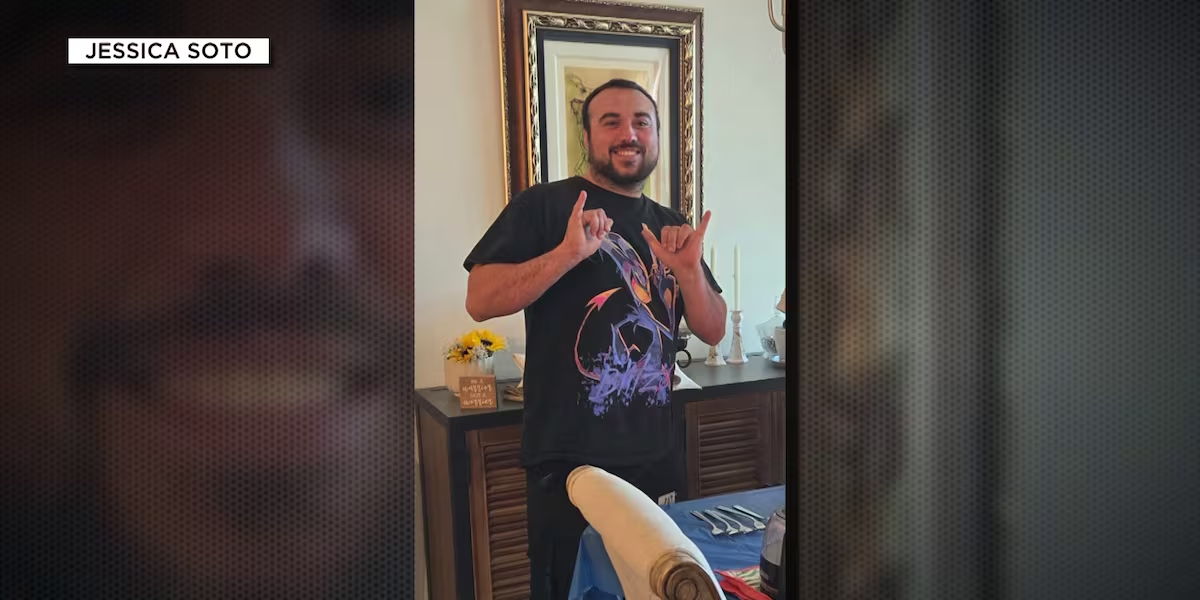
MARICOPA, AZ (AZFamily) — The family of a 28-year-old man killed while helping at a crash scene on Interstate 10 in Cochise County is warning others about the dangers of driving in severe weather after he was struck by a hydroplaning vehicle.
Read more 29-year-old accused of stabbing woman with pitchfork, officials say
Timothy Patsalos stopped July 21 after witnessing a rollover crash during a monsoon storm. While he was outside his vehicle attempting to help, a second car hydroplaned and struck him. He was rushed to a hospital with severe injuries and did not survive.
“The last time I spoke to him was July 21, at noon. And that was three hours before he died,” said his mother, Jessica Soto.
Soto said Patsalos had spent years working as a commercial truck driver and understood how quickly roads become dangerous in storms.
Family reflects on the loss
Patsalos’s sister, Jianna, said she has struggled to process the death.
“I tried forgetting about it. I tried forgetting it even happened. Trying to tell myself this is just a dream,” Jianna said.
She said the driver who struck her brother made a choice that contributed to the crash.
“In inclement weather, rain, it’s gonna make the road slippery. It was their choice to speed and not slow down,” Jianna said.
Driving expert warns of secondary crash danger
Maria Wojtczak, owner of driving school DrivingMBA, said wet pavement is more dangerous than many drivers recognize.
“People don’t seem to realize that as soon as that pavement starts to get wet, the oils start to come up from the pavement. And so that’s what’s making that pavement really slick,” Wojtczak said.
According to Bucknell University, secondary crashes — those that occur at or near an existing accident scene — can be up to three times more severe than the initial collision.
Read more Jorge Soto named Pima County treasurer
“If you spin out, the spin out’s not going to be as nearly as bad as if somebody hits you again, which can be pretty typical,” Wojtczak said.
Wojtczak said drivers on a freeway should reduce their speed by one-third in poor conditions.
“If you’re on a freeway, typically it’s going to be 65 miles, so you want to reduce that by one-third so you can control your vehicle,” she said.
She also advised that stopping to help at a freeway accident scene may put bystanders at risk, and that calling 911 is often the safer option.
“Especially if you’re on a roadway where visibility is bad, and you go and try to help somebody, like in that situation, all of a sudden there’s another tragedy. So it’s best to call,” Wojtczak said.
Arizona Move Over Law
Arizona’s Move Over Law requires drivers to slow down and move over one lane when approaching any stopped vehicle on the roadside. The law applies to all vehicles.
See a spelling or grammatical error in our story? Please click here to report it.
Do you have a photo or video of a breaking news story? Send it to us here with a brief description.
Read more Yuma alarm test: Why sirens may sound for hours Wednesday