 By admin
FLAGSTAFF, AZ (AZFamily) — The Flagstaff Science Festival, the nation’s longest-running free science festival, continues this weekend.
Read more Jury finds northern Arizona man guilty of sexual assault, child sex charges
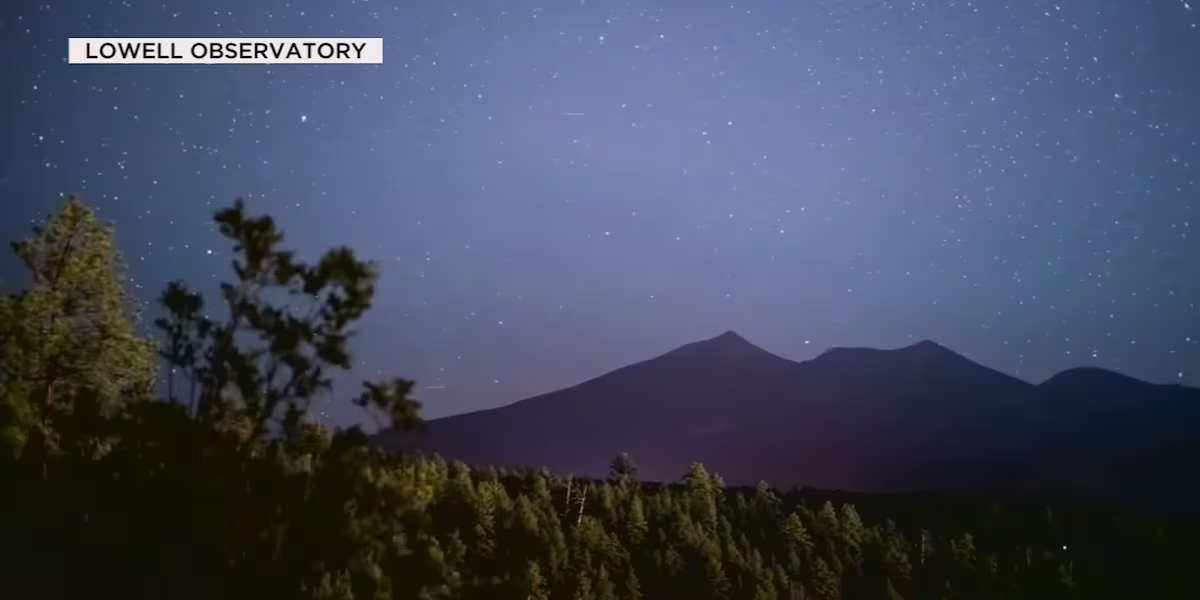
The festival brings in scientists from around the world, and this year’s focus includes Flagstaff’s status as an International Dark Sky City.
This year’s festival coincides with the 25th anniversary of Flagstaff becoming the first International Dark Sky City.
Observatory studying the stars
Astronomers at Lowell Observatory have been studying the stars since 1894, before Arizona became a state. Scientists there discovered Pluto and that the universe is expanding. They also helped establish Flagstaff as the first International Dark Sky City.
As a dark sky city, there are limits to how much light buildings can give off, and all street lights use orange light. Today, more than 200 cities are certified as dark sky cities.
Kevin Schindler, Lowell Observatory’s historian, said the science festival helps show the public what researchers are usually doing behind closed doors.
“You know, having the dark skies is what makes astronomy so special here,” Schindler said. “But it’s beyond astronomy. It’s the ability to walk outside and gaze up at the sky and see the Milky Way. 80 percent of people who live in the United States live in a place where they can’t see the Milky Way.”
Scientists say work continues beyond festival
Flagstaff was the nation’s first designated STEM community. Lowell Observatory has sat above Flagstaff since 1894.
“You know cowboys and ranchers and railway workers and scientists rubbing shoulders,” Schindler said.
Schindler said the observatory’s founder, Percival Lowell, believed in sharing science with the public.
Read more Armed man shot, killed by deputies in Pima County identified
“Percival Lowell, our founder, said, ‘You know what’s the point of doing science if you don’t share it with everybody?’” Schindler said.
Sam Lockhart, who is studying planetary science at Northern Arizona University, said Flagstaff’s protected dark sky was one reason he chose the city.
“Being in a protected dark sky community means that there is a collective awareness and willing to protect our night skies and connect with the cosmos,” Lockhart said.
The festival includes a star party at Buffalo Park, where the public can look through more than a dozen telescopes for free.
While the science festival ends Sunday, Schindler said the scientific work continues.
“All these things have happened in the past; it’s not just a historic footnote; it’s the continuum of things still happening today,” Schindler said.
You can find the full schedule for the science festival here.
See a spelling or grammatical error in our story? Please click here to report it.
Do you have a photo or video of a breaking news story? Send it to us here with a brief description.
Read more Tennessee execution problems tie back to former Arizona corrections official