 By admin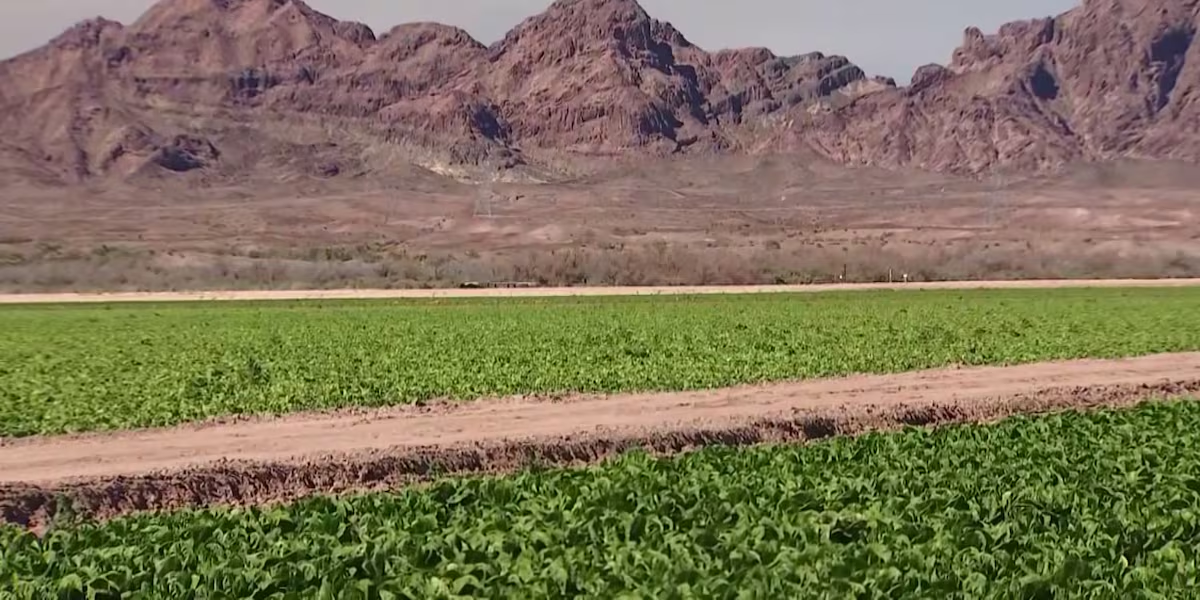
YUMA, AZ (AZFamily) — Extreme heat is creating unprecedented challenges for Arizona farmers, but a new scientific initiative in Yuma is working directly in the fields to help growers protect their crops and their bottom lines.
Read more Arizona fugitive wanted for 20 years on child molestation charge caught in Texas
The Desert Agriculture Soil Health Initiative (DASHI), which launched in 2023 under the direction of University of Arizona Associate Professor Dr. Joey Blankinship, has officially established a physical soil health laboratory at the University of Arizona Yuma Agricultural Center. The local facility represents a major shift for regional agricultural research, which was previously concentrated more than three hours away in Tucson.
Researchers say that distance made it difficult to capture rapid changes in local soil conditions and monitor how Yuma’s unique desert environment affects crop output over time.
A local solution for the ‘lettuce capital’
Yuma is widely known as the winter lettuce capital of the world, with its farmers producing nearly 90 percent of the leafy greens consumed in the United States. However, as the regional climate becomes increasingly hot and dry, maintaining soil health has become a critical challenge for keeping that tradition alive.
“Soil is the foundation of everything in agriculture,” said Josett Clark, the lab’s research technician. “You can’t have a healthy crop without healthy soil.”
Clark, who manages the day-to-day operations at the new Yuma facility, explained that having a local lab drastically improves collaboration with local growers.
“It was really accidental to find a research tech run a Yuma soil health lab, so we are just closer and can communicate more clearly,” Clark said.
Combating desert extremes
The new laboratory focuses on analyzing the chemical, biological, and physical indicators of soil health. Currently, researchers are working on projects designed to help plants overcome the physiological stress caused by extreme desert temperatures.
Read more West Nile virus on rise in Pima County
Yuma’s harsh conditions—characterized by high temperatures, limited rainfall, and high soil salinity—make it the ultimate testing ground for desert agricultural research. Farmers in the area face exceptionally high rates of evapotranspiration, a process where water rapidly transfers from the land and plants into the atmosphere due to hot, dry conditions.
“We have such specific and harsh conditions like our hot and dry weather,” Clark said. “We have high salinity here in our soils, all kinds of issues that we need to learn to mitigate, which is why it was so important to bring a soil health lab here.”
The work ahead
The overall goal of the lab is to translate complex soil science into practical management solutions that local growers can easily implement to improve crop nutrition and water retention.
While the facility is already operational, researchers emphasize that they are just getting started. So far, the team has analyzed about 20 fields in the Yuma area. However, with more than 230,000 acres of active farmland across Yuma County, scientists still have a mountain of work ahead of them as they help desert agriculture adapt to a changing climate.
See a spelling or grammatical error in our story? Please click here to report it.
Do you have a photo or video of a breaking news story? Send it to us here with a brief description.
Read more 13 FACT FINDERS: U of A researcher finds ties between hormone, aging