 By admin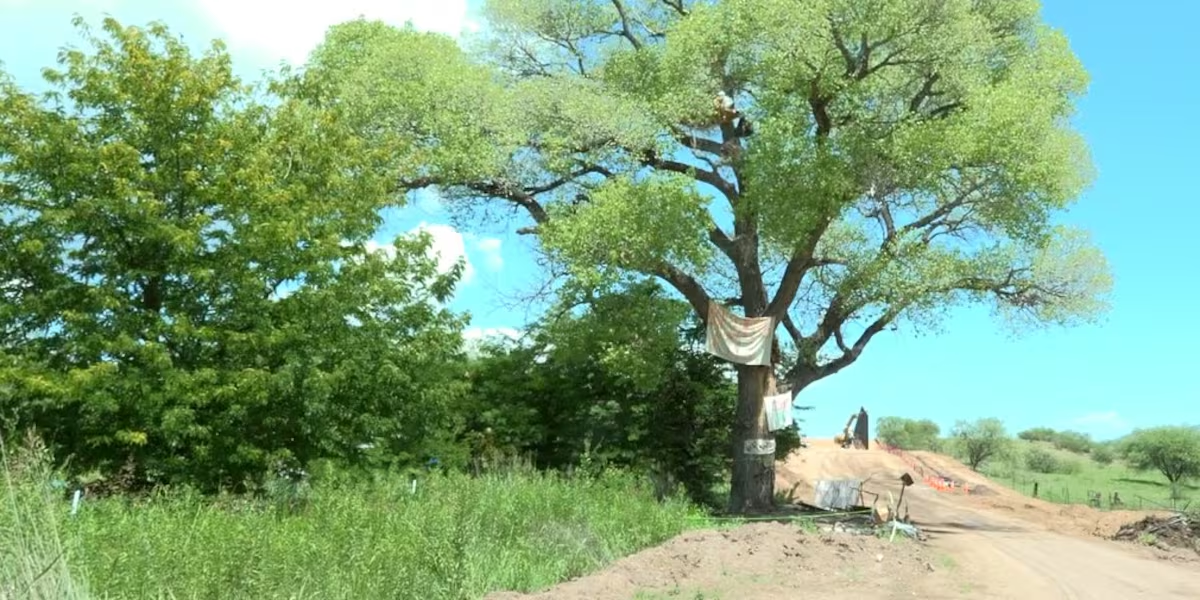
TUCSON, Ariz. (13 News) – Protesters have spent nearly three weeks guarding an old cottonwood tree along the U.S.-Mexico border in an effort to stop construction crews from removing it.
Read more Criminal investigation opened into use-of-force by 2 Phoenix police officers
Protesters have traveled across state lines, set up campsites and weathered monsoon storms to protest the tree’s removal in Lochiel, which is about 23 miles east of Nogales.
A 13 News crew on Monday saw that construction crews have made progress on a new border wall just hundreds of feet away from the tree, but protesters said they plan to stay as long as it takes.
Growing movement
In the remote San Rafael Valley, an area filled with cattle, dirt roads and barbed-wire fences, the protest has grown.
“We’ve gone over at least a hundred or so people,” said Kate Scott, an environmental activist with the Madrean Archipelago Wildlife Center.
Cars have arrived in large numbers to protest the removal of what protesters call “the grandmother” — the last of four cottonwood trees standing along Lochiel’s southern border.
The other three were torn down last month, according to the protesters.
“So I’ll always feel a pain, a visceral pain when I look at them,” Scott said.
Scott led the effort to protect the remaining tree as construction crews made way for a new 27-mile stretch of border wall.
Details of border wall contract
The project is part of a $334 million contract from U.S. Customs and Border Protection, which includes building a double-layer border wall through the entire San Rafael Valley.
The contract requires the removal of Lochiel’s cottonwoods. Scott said the impact will stretch further than the trees.
“This is an important sight that should not be ruined, there should be no wall at all,” Scott said.
Read more Surprise cancels Flock contract after potential misuse
Scott said the valley is one of the most important wildlife corridors in the borderlands, and that border fencing can be devastating to wildlife habitats.
“What it does to wildlife is it kills them. They have no other recourse, they can’t just run and run and run, find the next water hole, find the next grassland,” Scott said.
Wider impact across borderlands
Scott said the land is also culturally important. The project is one of more than a half-dozen planned by CBP across the Arizona-Mexico border, and it is not the only one facing opposition.
“I hope that this reverberates with our friends in Big Bend, the Tohono O’odham nation, the Quitobaquito, all across the borderlands that are being impacted,” Scott said.
Scott and fellow protesters said they are taking a stand to protect not just the tree, but what it means to the valley.
“We’re tired of being assaulted by this murderous border wall and the assault on our lands, and the people, and the wildlife, and the water, and so it means something to people,” Scott said.
CBP response
CBP had not responded to a request for comment as of Monday, August 17.
Scott said CBP has not approached the protesters and the sheriff’s office has not yet told them to leave.
Are you streaming 13 News?
Watch a free live stream of Tucson Now and 13 News at TucsonNow.Live.
Be sure to download the free Tucson Now app, which you can find on Apple and Google.
If you are using a desktop computer, you can use your mobile device to scan the QR code below.
Read more St. Jude Dream Home Giveaway supports childhood cancer research, offers chance to win Tucson home
You can submit your breaking news or weather images here.