 By admin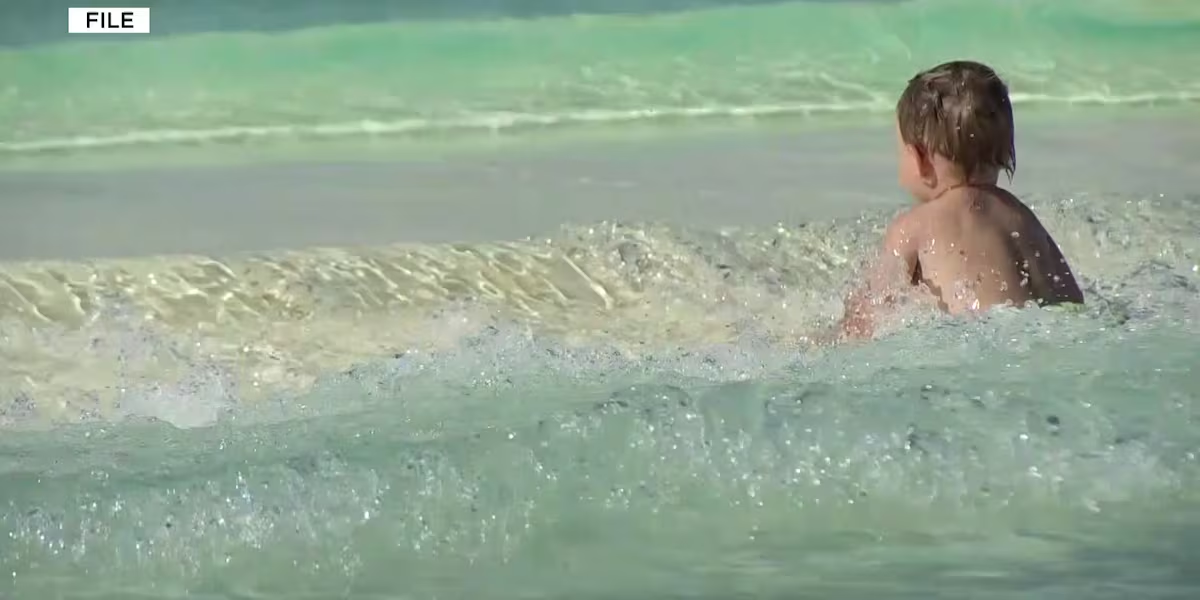
PHOENIX (AZFamily) — A parasite called Cyclospora, linked to severe gastrointestinal illness, is spreading across the country—including in Arizona—and health officials say pools and splash pads may be contributing to its spread.
Read more Maricopa County board, recorder in mediation over general election plan
Maricopa County Public Health reports 10 current cases of cyclosporiasis in the county. Nationwide, nearly 850 cases have been confirmed and 86 people have been hospitalized.
Resistant to chlorine, hard to detect
Health experts say the Cyclospora parasite is resistant to chlorine and bleach, making it difficult to eliminate from pools and splash pads. Dr. Rucha Shah, a gastroenterologist with HonorHealth, said those water environments present particular risks.
“Those are hotbeds for feces, unfortunately, especially with young children. So a lot of those bugs get killed by the chlorine. This one’s a little bit more resistant,” Shah said.
Cases may be undercounted
Dr. Shah said the reported numbers of cyclosporiasis cases may not reflect the full scope of the outbreak because Cyclospora is difficult to detect through routine testing.
“Our standard stool tests are looking for things like E. coli or Salmonella or Shigella, which are infections and viruses, as opposed to this is a parasitic infection,” Shah said.
She added that the parasite or its eggs may not always appear in a given sample. “So sometimes not every sample may have the actual bug or the eggs itself. And so then it doesn’t get picked up,” she said.
Read more Tucson Fire responds after three vehicles get stuck in flooded roadways
Symptoms and treatment
Cyclosporiasis can cause explosive diarrhea, nausea, cramping, bloating, and fatigue. Symptoms may not appear until days or weeks after exposure. Dr. Shah said the illness can last longer than other gastrointestinal infections.
“This one can be a little bit longer. And it’s because it’s just a bit more resistant,” she said.
“It’s really frustrating, especially when you have young children,” Shah said.
Cyclosporiasis is treatable with antibiotics, but doctors say early detection is important.
How to reduce risk
Health officials say people who are sick should stay out of pools and splash pads to prevent further spread. “It’s something that we really need to be careful about, because that’s really how it gets there,” Shah said.
Additional precautions include:
- Do not swallow water in pools or splash pads.
- Wash hands frequently.
- Wash fruits and vegetables, including berries, mixed lettuce, and cilantro, which have been linked to the parasite.
- Store produce at proper temperatures.
See a spelling or grammatical error in our story? Please click here to report it.
Do you have a photo or video of a breaking news story? Send it to us here with a brief description.
Read more One person suffers life-threatening injuries near I-10, 22nd Street