 By admin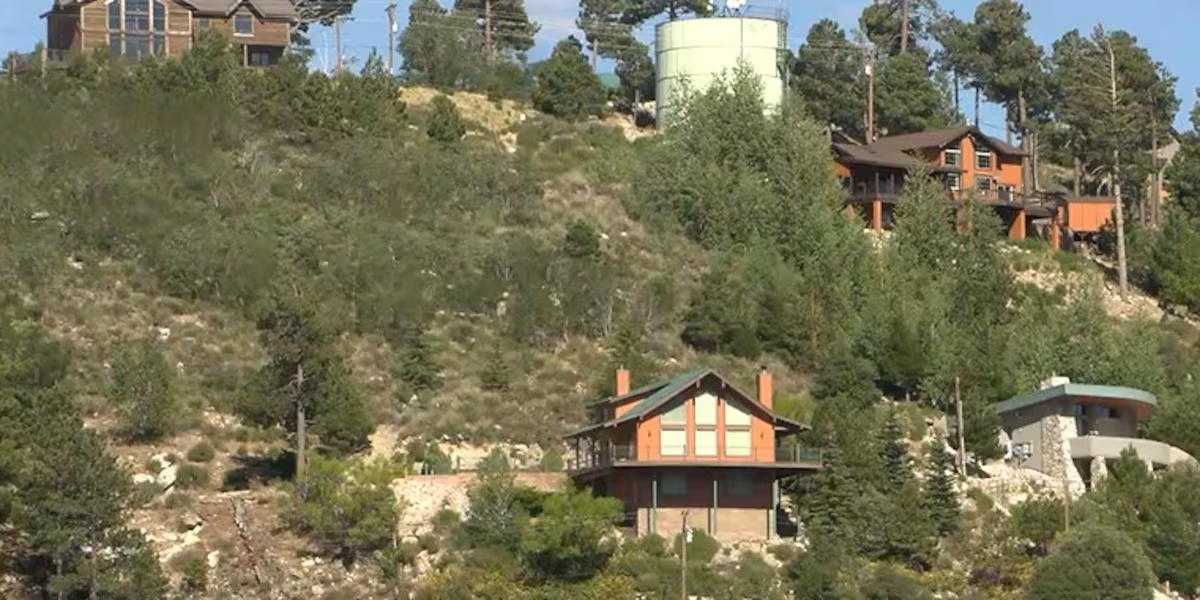
TUCSON, Ariz. (13 News) – Stage 3 water restrictions on Mount Lemmon are putting pressure on short-term rental property owners as the area enters one of its busiest tourism seasons.
Read more Trump threatens Iran after Ayatollah Ali Khamenei’s funeral saw open calls for his killing
Owners are warning that renters who use more water than allotted could face fees, as doing so could result in the properties having their water completely cut off for days.
Since Wednesday, each property on Mount Lemmon has been capped at 2,400 gallons of water per month — roughly 80 gallons per day. Property owners said that the amount can be exhausted quickly, prompting many to actively monitor daily usage and educate renters.
According to the EPA, the average home in the U.S. uses 300 gallons of water per day. That breaks down to around 82 gallons per day, per person. The cap on Mount Lemmon is just 80 gallons per day per home.
Some of the biggest water wasters are leaks in pipes, running the faucet while brushing your teeth or washing dishes, and running the dishwasher or clothes washers before they are full.
Leanne Mack, owner of Leanne’s Lemon Fresh Cleaning Services, works with dozens of short-term rental property owners and said many are using platforms like Airbnb to get ahead of the issue.
“The owners will educate the renters through the Airbnb app,” Mack said.
At least one Airbnb listing reviewed by 13 News outlined the restrictions and possible fines for overusage on its front page.
Diana Osborne, owner of Mount Lemmon Lodge, has four external cabins that function similarly to Airbnbs. She said that because of the water restrictions, she monitors them daily through the water district’s system.
“Those four cabins are monitored daily by our water district’s Metron system, which is great, because I can log in, I can see exactly how much water is being used every day, um, and how it’s being used,” Osborne said.
Osborne said overuse early in the month forces her to block off bookings later to stay within the monthly cap.
“With the remaining days left, if I have to black out those, I don’t rent those cabins in order to preserve the water use for each month,” Osborne said.
Read more Lawsuit seeks to block controversial Arizona ‘Secure The Border Act’ provision
Mack said some of her clients will cancel reservations when a property approaches its monthly limit to avoid a shutoff and the fines that come with it.
“My clients will actually cancel people if they’re getting close to their 2,400 gallons for that month because what happens is they get locked off, and it’s a fine. If that happens three times, the third time the lock doesn’t come off until restrictions are over,” Mack said.
Osborne said the financial consequences for short-term rental owners who don’t black out their rental properties can extend beyond lost bookings.
“If you don’t black out the cabin and the water is shut off, it will hurt your business,” Osborne said.
That’s why Mack said ongoing education is central to managing usage among the hundreds of visitors who come to the mountain each day.
“It’s just educating, educating, educating. As much as you can teach somebody,” Mack said.
Property owners, including Osborne, are distributing flyers to guests that outline conservation methods such as shorter showers, running full loads of dishes, and being mindful of sink usage and toilet flushes.
Are you streaming 13 News?
Watch a free live stream of Tucson Now and 13 News at TucsonNow.Live.
Be sure to download the free Tucson Now app, which you can find on Apple and Google.
If you are using a desktop computer, you can use your mobile device to scan the QR code below.
Read more Landmark housing bill would bring more affordable options to Tucson
You can submit your breaking news or weather images here.