 By admin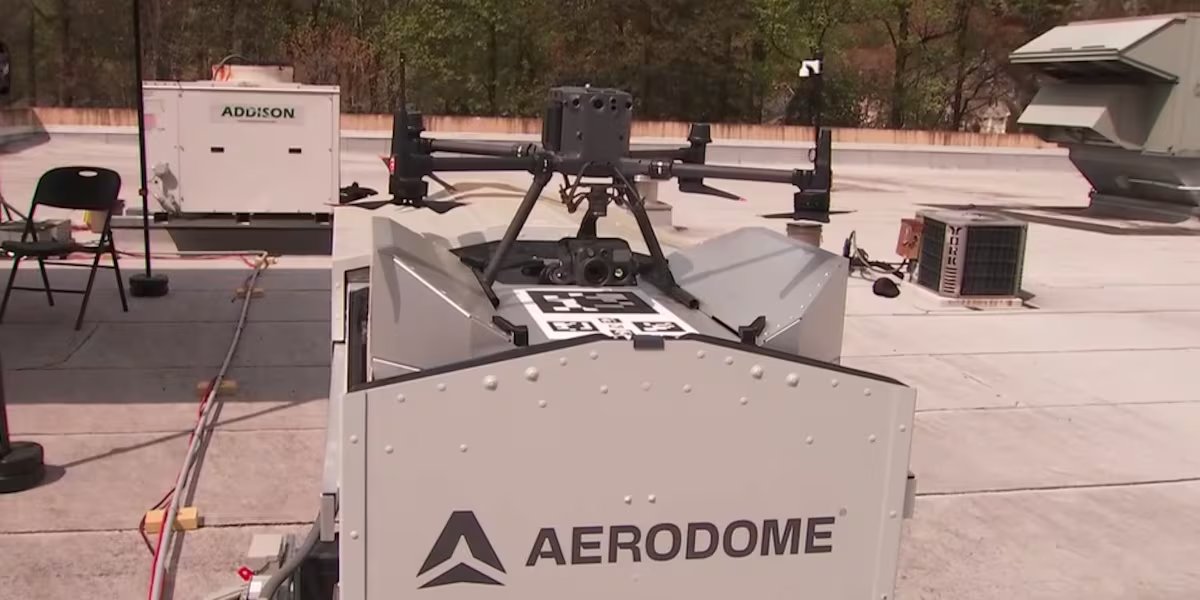
TUCSON, Ariz. (13 News) – Tucson city leaders approved a new police pilot plan for emergency response drones, while Oro Valley expects to receive a fleet of drones as first responders this summer.
Oro Valley is expected to receive the first of four Flock DFRs, or drones as first responders, in the next few weeks.
How the drones work
Southern Arizona police have used drones for years, but Oro Valley police Lt. Kevin Peterson said the new system is different because officers do not have to drive to a scene to launch the drone.
“Right now, our current program, the operators have to drive to the scene and launch from the scene itself. Well, now they can remotely launch,” Peterson said.
When a call comes in, a person launches the drone from one of two elevated locations. The drones can travel up to 3.5 miles and are faster than human responders nine out of 10 times, according to the script.
Peterson said the drones can give police early information from a scene, often while officers are also responding, helping the department decide what additional resources to send and assess safety.
“So if we can get on scene and get situational awareness, not only does it make our job easier, but it makes the public safer,” Peterson said.
Privacy and data questions
Concerns about drones flying over private property have been raised at Oro Valley council meetings.
“Trusting the system because you’re innocent is like trusting a shark because you’re not a fish,” resident Sean Glaser said.
Oro Valley police said the drones will have to follow FAA regulations, similar to private drone operators. Police policy prohibits surveillance and infringing on a person’s reasonable right to privacy.
“The drones aren’t always flying around. They’re launched for specific reasons at specific times when we tell them to launch. They’re not surveilling the public, and they’re not recording until we think that we may have evidence of a crime and we press the record button,” Peterson said.
Recorded footage is deleted after 30 days unless it is needed for a case.
During discussion of Tucson’s one-year police pilot program, Ward 6 Council Member Miranda Schubert asked about data sharing involving the Skydio product and Axon’s ongoing contract with the Department of Homeland Security.
Luis Romero, technology administrator for the Tucson Police Department, said the system is not shared with other agencies.
Read more Big Tigger, radio personality and former BET host, arrested in Georgia
“This is solely for the city of Tucson and specifically for the Tucson Police Department,” Romero said.
Romero said the footage will be end-to-end encrypted. Tucson police modeling shows the drones could cover more than 65,000 calls a year.
Funding and oversight
In Tucson, the Pima County Regional Transportation Authority is paying for the program, which will be audited with citizen oversight, adhering to the city’s technology policy.
In Oro Valley, the $146,000 for the drones came from a state grant to fight border crime. Peterson said Oro Valley is impacted by border crimes, but the drones are not to be used in immigration enforcement or for ICE.
Both Oro Valley mayoral candidates were asked to comment on the use of Flock technology. Vice Mayor Melanie Barrett referred questions back to Oro Valley police.
Below is the response from former Pima County Sheriff Mark Napier:
“Based on my experience, I believe FLOCK, license plate readers (LPR), and drones have legitimate and significant public safety value. FLOCK and LPR technology assist law enforcement in tracking vehicles involved in criminal activity, recovering stolen vehicles, and gathering valuable criminal intelligence. These tools can provide critical leads in investigations and help solve crimes more quickly and efficiently.”
“Drones also offer substantial public safety benefits. They can be used to survey areas for dangerous suspects while reducing the risk of placing officers directly in harm’s way. They also have tremendous value in locating missing children, vulnerable adults, and individuals in crisis, often in difficult terrain or time-sensitive circumstances.”
“Privacy concerns regarding these technologies are real, and I respect those concerns. However, I have confidence in law enforcement’s ability to use these tools responsibly, safeguard personal information, and operate under clear policies that ensure strict accountability and maintain public trust.”
“Finally, like the activities of any public body, the use of these technologies creates public records that can be reviewed and scrutinized to ensure transparency, document their use, and provide the public with oversight. When used properly, these tools can improve public safety, community service and officer safety while preserving public trust.“
===================================================
Are you streaming 13 News?
Watch a free live stream of Tucson Now and 13 News at TucsonNow.Live.
Be sure to download the free Tucson Now app which you can find on Apple and Google.
If you are using a desktop computer, you can use your mobile device to scan the QR code below.
Read more Supreme Court rules Rastafari man can’t sue prison officials who cut his dreadlocks
You can submit your breaking news or weather images here.