 By admin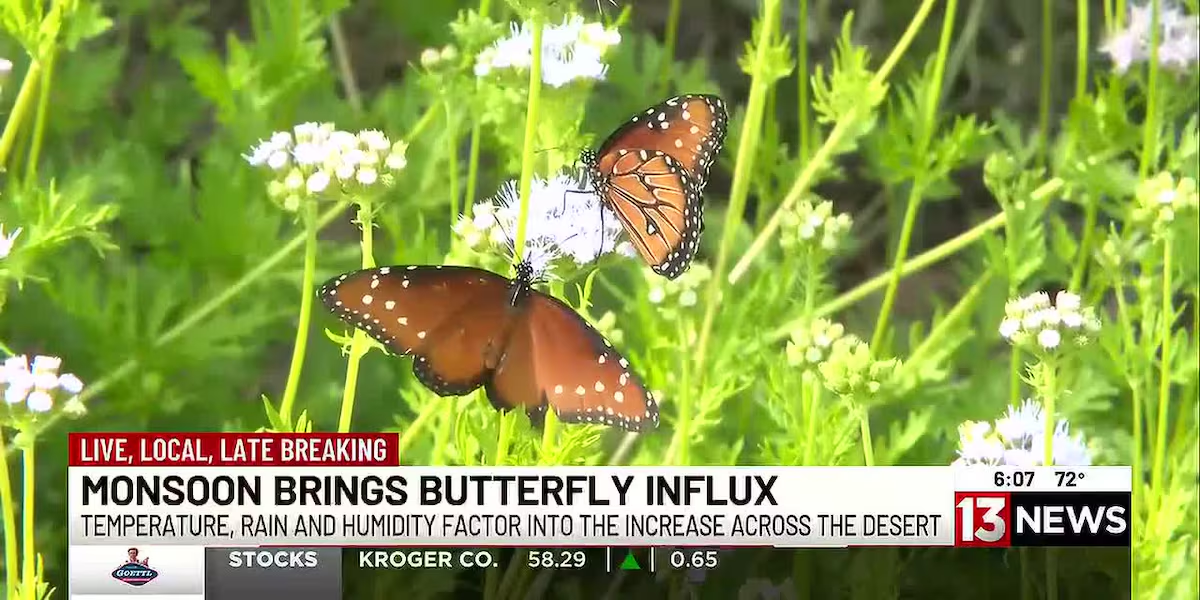
TUCSON, Ariz. (13 News) – If you have noticed swarms of butterflies fluttering across roadways and gardens throughout Southern Arizona lately, you are not imagining things.
Read more Body found inside burnt car behind Gilbert strip mall
A massive influx of American snout butterflies is traveling through the Sonoran Desert from South Texas and Northern Mexico just in time for fall. Experts say it is the largest wave the region has witnessed since 2021.
At Tohono Chul botanical gardens on Tucson’s northwest side, dozens can be seen darting around the entrance and gathering near damp terrain.
Botanists say the boom is tied directly to the weather.
“Our butterflies respond to rainfall, and for butterflies that operate well under warm temperatures and are sensitive to frost, our monsoon rainfall is really going to dictate how many and what sort of diversity that we have in a given year,” said Jack Dash, gardens and facilities manager at Tohono Chul. “The main factor that will drive an abundance of butterflies is going to be rainfall and the availability of water.”
During drier seasons, only enough butterflies emerge to reproduce and sustain the next generation. But for massive numbers to migrate across the region, a rare alignment of temperature, humidity, and abundant late-monsoon rain is required.
Currently, large clusters are flocking to flowing streams, muddy regions, and flower-filled spots like Sabino Canyon, Madera Canyon, and local botanical gardens.
Read more LSU football player accused of sexually assaulting student prompts criminal investigation, DA says
Many are also engaging in a behavior known as “puddling”—congregating around damp soil, washes, and standing water.
“Not only are they getting water, but they’re also getting minerals out of that mud pile that will help them find a mate and also ensure they are able to pass some of those minerals to the mate and therefore to the offspring,” Dash explained.
Because these butterflies frequently gather directly in muddy road dips and street puddles, experts urge drivers to slow down, avoid splashing directly through standing water where swarms are resting, and let them feed undisturbed.
Residents can also support the travelers in their own backyards by planting nectar-rich native blooms and providing shaded rest spots.
Because monsoon rainfall patterns fluctuate drastically year to year, experts encourage wildlife enthusiasts and photographers to grab a pair of binoculars and enjoy the rare desert spectacle while the conditions last.
Read more Ex-NFL star Antonio Brown to accept plea deal on attempted murder charge, his lawyer says
Did you know 13 News has podcasts? Here’s the link to see the lineup.