 By admin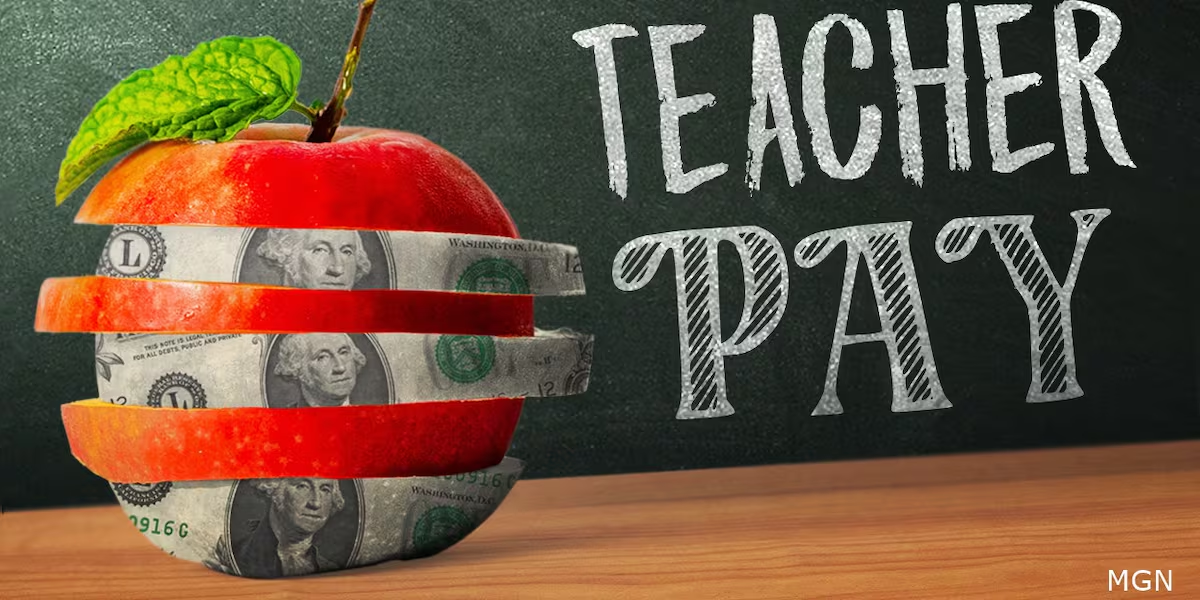
PHOENIX (AZFamily) — Two sides of Arizona’s teacher pay debate will face off Thursday evening during a debate on , a ballot measure aimed at boosting classroom spending.
Read more Monsoon called out sick, today. Due back next week
The half-hour debate will be livestreamed at 6 p.m. on Arizona’s Family’s website and app.
Chris Thomas, education policy legal strategy director for the Goldwater Institute, will argue in favor of the measure. Jimmy Arwood, director of government relations for the Arizona School Boards Association, will argue against it.
What Prop. 320 would do
Prop. 320 was referred to the ballot by the Legislature and will go before voters in the November general election.
If approved, it would require certain school districts to spend at least 60% of their operational spending on “direct instructional expenses.”
Districts currently spending less than that would have to raise that share by at least half a percentage point every year, starting in fiscal year 2027-2028, until they hit the 60% threshold.
The proposition would apply to districts with more than 7,500 students, or those in counties with more than 500,000 residents — covering all districts in Maricopa, Pima and Pinal counties.
RELATED: What Arizona’s Prop. 320 could mean for teacher pay and school budgets
The case for and against
Thomas previously argued for the measure, saying it puts the focus on teacher pay rather than administrative pay and could also apply to spending on things like field trips, supplies and extracurriculars.
Read more Teen arrested in ‘Door Kick Challenge,’ Phoenix police say
Arwood and other critics counter that the spending definition is too vague, warning it could force districts to cut transportation, food service or student support programs instead.
Under the measure, the auditor general, not the Legislature, would be responsible for defining exactly what counts as “direct instructional expenses” and “operational spending,” a detail critics say fuels the uncertainty.
Penalties for noncompliance
Districts that fall short of the requirement would face escalating penalties: a 25% cut to their Classroom Site Fund allocation after one year of noncompliance, 50% after two years, 75% after three, and the full allocation after four or more years.
The superintendent of public instruction could waive that penalty for up to one year at a time, generally no more than twice per district in a 10-year span. The measure does not create new funding, meaning districts would need to meet the spending target by reallocating existing dollars.
See a spelling or grammatical error in our story? Please click here to report it.
Do you have a photo or video of a breaking news story? Send it to us here with a brief description.
Read more Buckeye school struck by lightning minutes after students were let inside