 By admin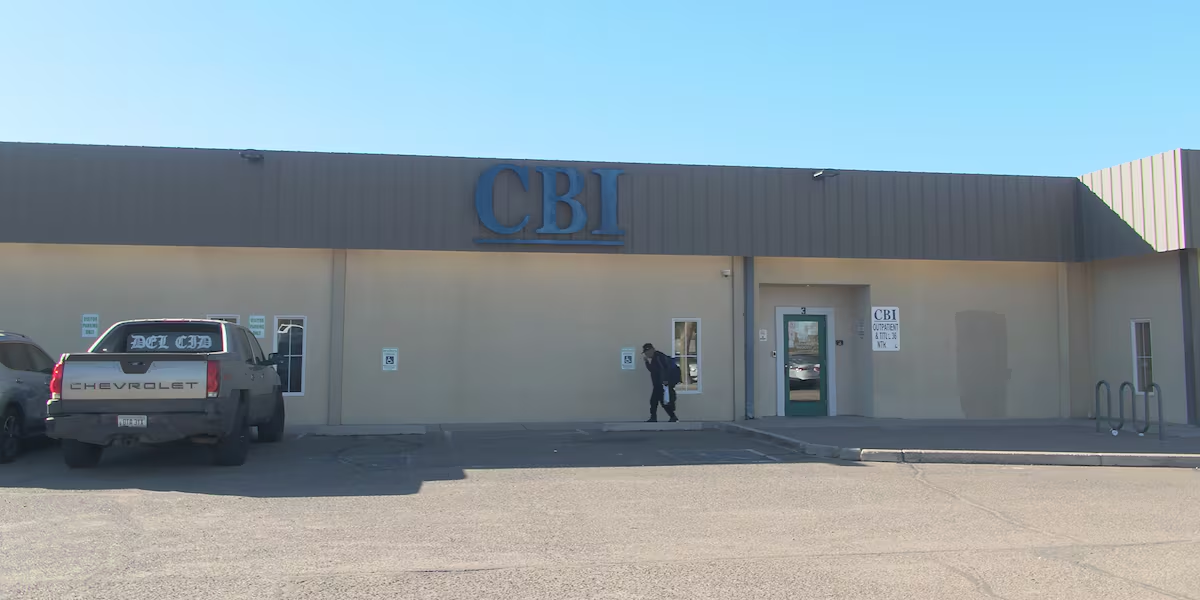
TUCSON, Ariz. (13 News) – The Pima County Board of Supervisors unanimously approved $2.2 million in opioid settlement funds Tuesday to extend a pilot program aimed at helping people struggling with substance abuse.
Read more Military families get major home makeovers at Davis-Monthan Air Force Base
The unanimous 5-0 vote ensures that the Sobering Alternative to Recovery Center, known as the SAFR Center, can continue offering 24/7 crisis care through next summer.
Pima County expects to receive up to $90 million in opioid settlement funds over the next 18 years. However, county officials emphasized that continued funding for programs like the SAFR Center depends heavily on data proving their effectiveness.
“We are seeing that this can be a successful program if we keep doing it the way we’re doing it, so we just need to kind of prove it to ourselves and the community by accumulating some additional data,” said Pima County Supervisor Matt Heinz. “We don’t want to just throw money at things if it’s not actually helping.”
The SAFR center, which opened in January, is operated by Community Bridges Inc. (CBI) at its facility on South Toole Avenue. The center features 15 overnight beds and offers a unique approach to crisis care: patients can stay for up to 96 hours and are allowed to bring their pets and personal belongings inside.
According to officials, strict rules against pets and belongings at traditional facilities have historically acted as a major barrier, preventing individuals from seeking help. The program’s primary goals are to provide immediate care while keeping vulnerable populations out of local jails and crowded emergency rooms.
Early data from the Pima County Health Department shows promising results. Between January and April, more than 224 people were treated at the center. The majority of those patients were unhoused, and most chose to transition into long-term behavioral health services with CBI after their stay.
“If we can demonstrate that that outcome actually works, then that potentially allows us to set up a model that either the state can get behind or that the federal government can get behind,” said Brian Eller with the Pima County Health Department.
Read more Pima County extends GED program at jail for one year
While local hospitals and law enforcement agencies are already referring patients to the center, county officials say they want to see those referral numbers grow.
The county currently sits on a comfortable financial cushion to perfect the initiative, with nearly $1.7 million remaining untouched from the initial opioid settlement dollars used to kickstart the program.
Because the settlement funds will eventually run dry, leaders plan to use the upcoming year to prove the model’s long-term viability in hopes of securing permanent state or federal funding.
Over the next year, health leaders will focus on improving staffing, transportation, and data collection to make a case for turning the pilot project into a permanent community resource.
“I think anyone that drives around Pima County or Tucson in general would see that there’s still a lot of people that need this kind of service,” Eller said.
====================================================
Are you streaming 13 News?
Watch a free live stream of Tucson Now and 13 News at TucsonNow.Live.
Be sure to download the free Tucson Now app which you can find on Apple and Google.
If you are using a desktop computer, you can use your mobile device to scan the QR code below.
Read more Dangerous heat today; Red Flag Warning fuels fire danger this weekend
You can submit your breaking news or weather images here.