 By admin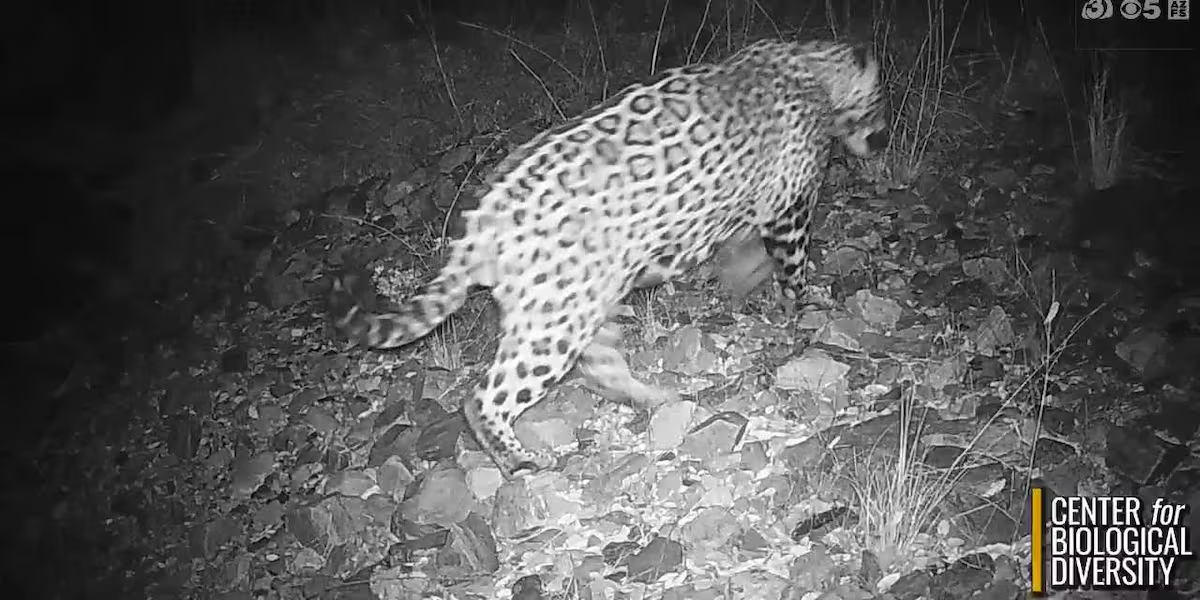
TUCSON, AZ (AZFamily) — New video captured a rare sighting of an endangered wild jaguar prowling through a mountain range in southern Arizona.
Read more Sierra Vista USD board votes to consolidate another school
The Center for Biological Diversity set up wildlife cameras in Arizona’s mountain ranges south of Tucson and captured the adult male jaguar, named Cinco. The wild cat was spotted pacing around the area three separate times in March and April.
Other wildlife, including a bear, fox, mountain lion, deer, ringtail and bobcat were also caught on camera.
Cinco is no stranger to the Arizona desert. Last year, he was photographed on three separate days in the southeast part of the state.
“Seeing this incredible jaguar roaming in Arizona’s wild sky islands is a powerful reminder that these cats belong in the American Southwest and northern Mexico,” said Russ McSpadden, Southwest conservation advocate at the Center.
Cinco gained his name from the University of Arizona’s Wild Cat Research and Conservation Center when he became the fifth jaguar documented roaming the mountain region. At least nine jaguars have been spotted in the Southwest since 1996, according to the Center.
WATCH BELOW:
Jaguars are endangered in both the U.S. and Mexico. Governments, tribal nations, communities and conservation groups have established conservation efforts to protect their habitats, restore wildlife corridors and protect their native ecosystems and lands.
Austin Nunez, chairman of the San Xavier District of the Tohono O’odham Nation, says jaguars are sacred in Native American culture. As part of a , the district called for stronger protections and conservation efforts to reintroduce the jaguar, or O:ṣhad, to its native land.
“I have prayed for the return of jaguars to these mountains, part of the ancestral lands of the O’odham. Jaguars are protectors of the people and are a part of our spiritual life and our connection to this land. Seeing a jaguar still moving through these mountains gives me hope for future generations and reminds us of our responsibility to protect these majestic animals and the places they depend on,” he said in a statement.
Read more Arizona community college graduates earn $9,100 more annually, report shows
Jaguars are the world’s third-largest cats, only behind tigers and lions. The majestic animals once lived throughout the Southwest, with historical records tracing them in the South Rim of the Grand Canyon. Over the past century, the jaguar population vastly decreased due to hunting, habitat loss and predator eradication programs, according to the Center for Biological Diversity.
McSpadden added that the wild cat’s northern range is at risk due to border wall construction, mining, groundwater depletion, and drought.
“We need to take urgent action to protect our vital cross-border ecosystems so jaguars can continue prowling the southern Arizona landscape alongside bears, pumas and ringtails. A landscape this wild is too precious to sacrifice,” he explained.
In 2014, the Center secured federal protection for thousands of acres dedicated to jaguar habitat recovery nationwide. Just a year later, the first video captured a wild male jaguar, nicknamed El Jefe.
In 2017, another wild jaguar, named Sombra, was spotted in Arizona’s Chiricahua Mountains.
Video is credited to Russ McSpadden/Center for Biological Diversity
See a spelling or grammatical error in our story? Please click here to report it.
Do you have a photo or video of a breaking news story? Send it to us here with a brief description.
Read more Portion of Grant Road to be closed for months; businesses to stay open