 By admin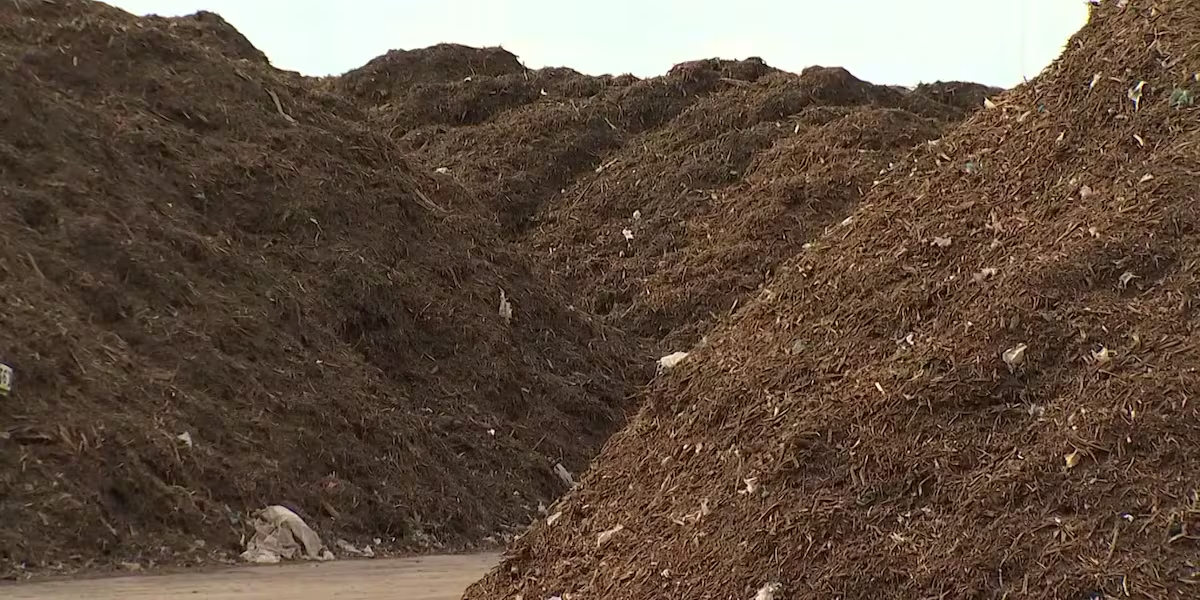
PHOENIX (AZFamily) — Arizona is set to take a cut in its share of Colorado River water over the next two years.
Read more ‘Free to do whatever he wants:’ D-backs manager addresses reports of Marte at casino
Years of high demand and severe drought have dropped the country’s two largest reservoirs to historic lows, and experts say there is also something people can do at home to help the Valley use less water.
Water-saving habits often include taking shorter showers, watering lawns early and running a full dishwasher load. Experts say turning food scraps into compost can be added to that list for conserving groundwater. Composting means healthy soil and better water retention around homes.
Denali, located on 27th Avenue and Lower Buckeye, is Arizona’s biggest composting plant. It collects material from hundreds of businesses across the state. Staff members say composting could be a lifeline for water retention as Arizona faces water cuts.
Margaret Wilson, general manager for Denali’s Four Corners States operations, got her start composting in her own backyard.
“If you use natural organic compost and mulches, you’re going to have an incredible erosion control. You will not see the runoff because it will soak it up because the soil will be able to absorb that water,” Wilson said.
Wilson said her lawn does not need as much irrigation, and her trees are protected from summer sunburn.
J.D. Hill, founder of R. City, collects food waste from several Phoenix city buildings every week.
Read more Community holds vigil for 11-year-old Marana killed in bicycle crash
“The mill bin turns four pounds of food waste into one pound of grounds,” Hill said.
Last year, the city partnered with R. City and another company called Mill.
“We want to walk the walk and talk the talk of our goals within the Climate Action Plan,” said Jordan Hill, circular economy administrator for Phoenix Public Works.
The plan aims to keep half of the city’s waste out of landfills by 2030 and all of it by 2050. The plan also got Mill bins into about 3,000 Phoenix households so families could compost at home.
Hill said Phoenix residents who want to compost at home can get a composting machine, regular pickup and farm-fresh vegetables for about $40 a month.
“I think it’s very important to turn to composting because food comes from thousands of miles away, and we need to re-fertilize our farm fields here locally and build a distribution system for local farms so those vegetables can easily get to people’s households,” Hill said.
See a spelling or grammatical error in our story? Please click here to report it.
Do you have a photo or video of a breaking news story? Send it to us here with a brief description.
Read more US imposes 50% tariffs on $20 billion worth of Canadian products; Canada says it will retaliate