 By admin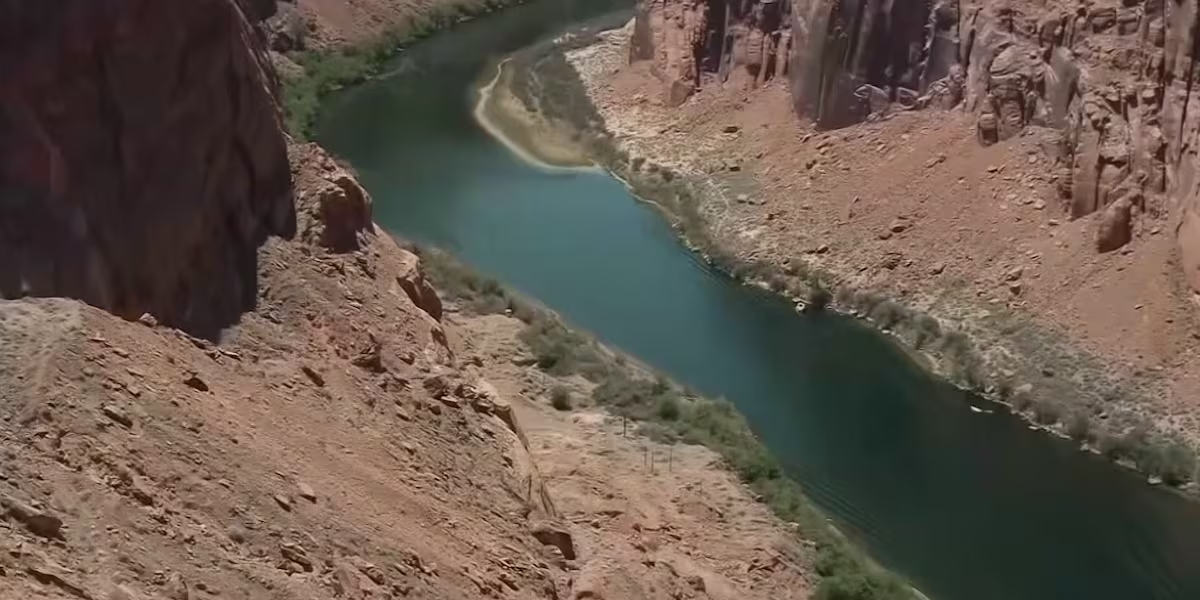
CAVE CREEK, AZ (AZFamily) — Changes are coming to the Colorado River, and Arizona will feel the impact of that.
Read more What ‘Super’ El Niño could mean for Arizona’s winter weather
As federal officials prepare to release details on cuts to Arizona’s Colorado River water allotment following the release of the Final Environmental Impact Study on Friday, the town of Cave Creek is already planning for a future with less of it.
Cave Creek gets about 95% of its water from the Colorado River through the Central Arizona Project.
“The reason why it’s so reliant upon surface water is since it’s up against the basin boundary,” Water Resource consultant Brad Hill said.
Hill was hired to consult with the town as they get ready to navigate this new future.
“Starting with a master plan several years ago, so we understood what the growth was, what the demands are going to be needed,” he said.
Hill outlined several options the town is weighing, including the Bartlett Dam and Salt River Project expansion, Harquahala Basin groundwater, and water exchanges with other cities. Cave Creek has already entered exchange agreements with other municipalities.
There are several factors that cities and towns have to weigh before deciding which path to take in the future.
“One of them clearly is price point per acre-foot. Another is the volume of that supply option. Meaning, is it a short-term volume or is it a long-term volume? Is that water available?” Hill said. “Least of which is what you alluded to is how do we get it to Cave Creek and to its treatment plant?”
Read more Rockford artist Jesse Leach pushes creative limits with 72-hour no sleep challenge
Sarah Porter, director of the Kyl Center for Water Policy, said the cuts will not immediately leave every city without water, but that diversifying supply is now necessary.
“You never want to manage water for a city in such a way that every single drop of water in your portfolio is used every year,” Porter said.
Cave Creek has not yet settled on an alternative source, but Hill says that the changes
“All the cheap, easy water has already been developed in Arizona,” Hill said. “Anything looking forward is going to be much more expensive, or we anticipate it to be much more expensive than the water that people are using today.”
Officials across the water sector are waiting on a Record of Decision and operating guidelines from federal authorities. Those documents are expected to include specific details on Arizona’s cuts and give cities and towns the hard numbers needed to pursue alternatives.
See a spelling or grammatical error in our story? Please click here to report it.
Do you have a photo or video of a breaking news story? Send it to us here with a brief description.
Read more Phoenix man faces felony charges after teen hospitalized with 50+ injuries, court records say